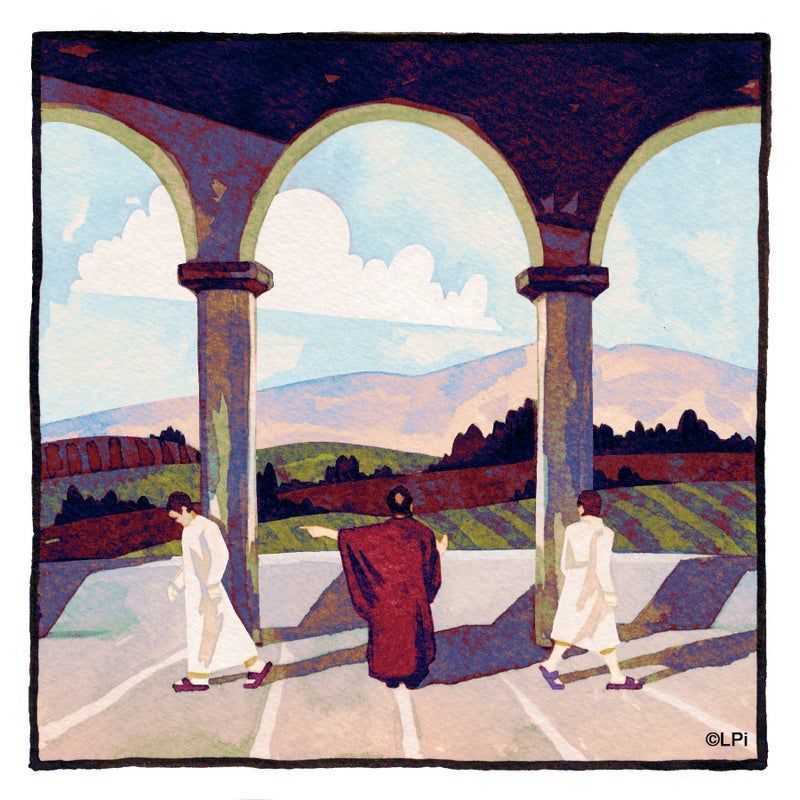
Our Lord Jesus Christ, King of the Universe, Year A
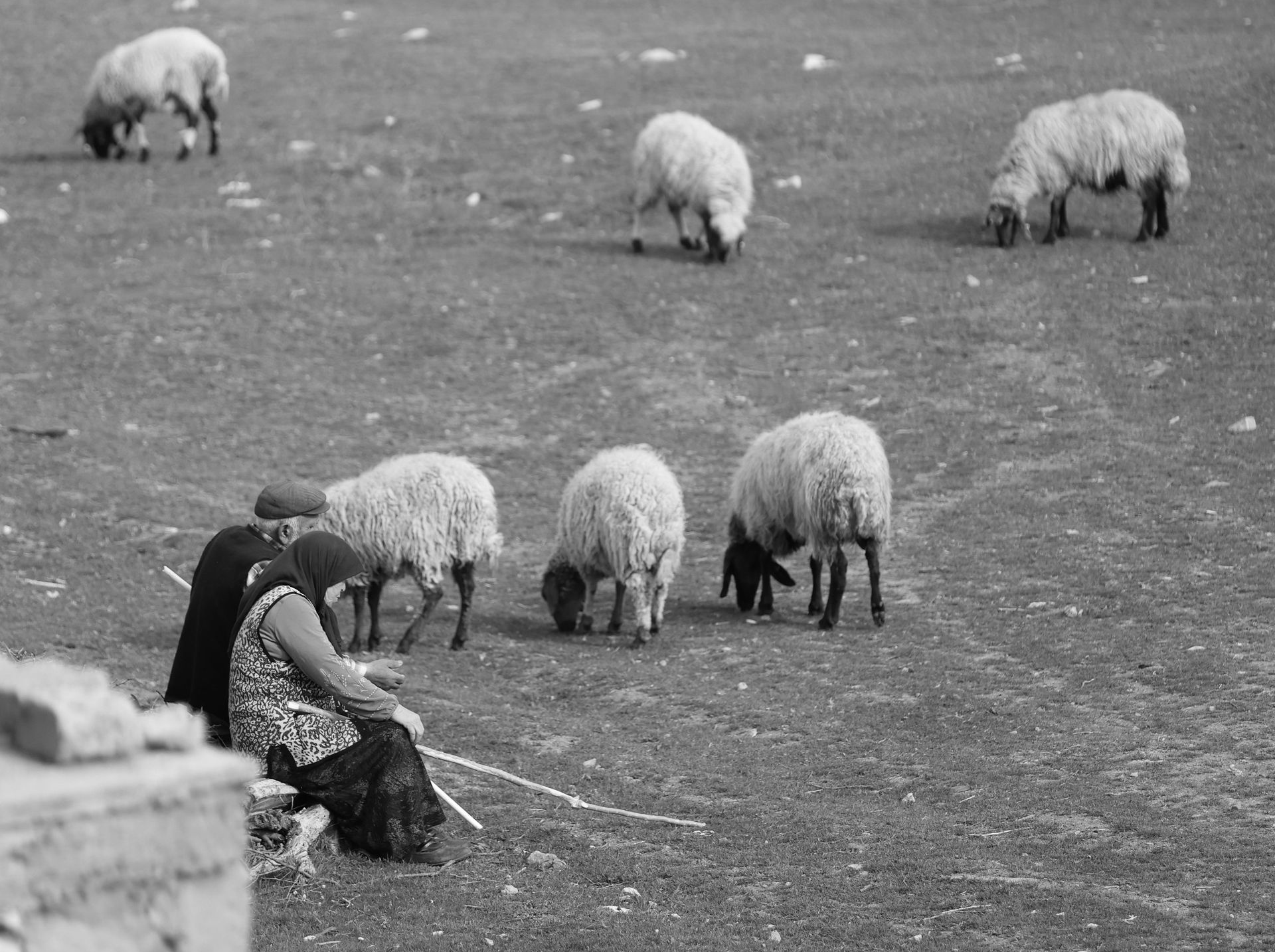
The reading we hear from the prophet Ezekiel is a beautiful passage reminding us of the nature of our God, who is a shepherd of the lost, the strayed, the broken and the sick.  What a consoling image and truth for all of us!  Thank God we have a Shepherd who seeks, finds, restores and heals us!


But lest we be complacent in this consolation!  The passage we hear is taken from a chapter where the prophet is calling the leaders of Israel to task for
not strengthening the weak, healing the sick, binding up the broken, seeking the lost and bringing back the strayed.  And those weak, sick, broken, strayed and lost sheep languish in the world, until they are devoured by the wolves of the world, whatever and whoever they may be. 


We have a God, Lord, and Savior who commands us, “
As I have done for you, you should also do.” (Jn 13:15b)  Sisters and brothers, Jesus makes clear that we are called to be shepherds with and for him, caring for his flock, caring for one another. 

  • Feeding the hungry: those who struggle to have enough food to eat. 
  • Giving drink to the thirsty: those who thirst for encouragement, companionship, a listening ear, or meaning and worth.
  • Welcoming the stranger: with words and actions of welcome and policies of inclusion and compassion.
  • Clothing the naked: yes, physically, with needed articles of clothing, but also by clothing the economically, spiritually, mentally, and emotionally naked with the dignity they have as sons and daughters of God by how we treat them.
  • Caring for the ill: not just in attending to their physical needs, but accompanying them in their dark valley.
  • Visiting the imprisoned: There are many prisons in this world, far more than just those with walls, gates, and guards.  We never know what prison our sister or brother may be in, and never underestimate your ability to be an angel of mercy, an instrument in the hands of God, who unlocks the gates of someone’s prison, simply by visiting them with a kind word or deed, care and concern, reassurance, forgiveness, or simply being present to them and listening. 


The problem arises —
disorder enters the flock — when we choose not to be the shepherds God the Father and Jesus Christ call us to be.  The prophet and Jesus Christ do not mince words about the consequences of failing to shepherd the flock.  We will be judged for inaction and misaction at the end of our days, and if found guilty, sent to eternal punishment.  That is a hard message to hear and it is tough love by our God, but love nonetheless, by our God who wants us to be in communion with Him eternally.


When we fail to be the shepherds God calls us to be, we need to examine our hearts for the attitudes and alternate gods — with a small “g” — that are occupying them.  When we give space in our hearts to these attitudes and gods that are not Christ, Christ does not reign solely in our heart as King; something else does.  But if we examine our hearts, let go of our attachments that are not the one true God, and seek to bear the fruit of the Holy Spirit, we become within us, as the Church father and priest Origen writes, “a kind of spiritual paradise where God may walk and be our sole ruler with his Christ,” who reigns “until all his enemies who are within us” are put under his feet, so that God may be all in all (1Cor. 15:28b).  Christ, King of the Universe. 


Sisters and brothers, no one of us can eliminate the scourge of poverty, hunger and homelessness, the suffering of injustice, or the weight of oppression.  No one of us can prevent falling into illness, the breaking of hearts, the injury of insult, or block all of the paths that lead astray.  But any of us can help to limit those scourges, ease the suffering and lift the weight. Any of us can tend to the one sheep, the person before us at any moment, and be the shepherd to them that Jesus calls us to be.  That is all, and nothing less than, we are called to be. 
By Deacon Paul Cerosaletti • October 18, 2026
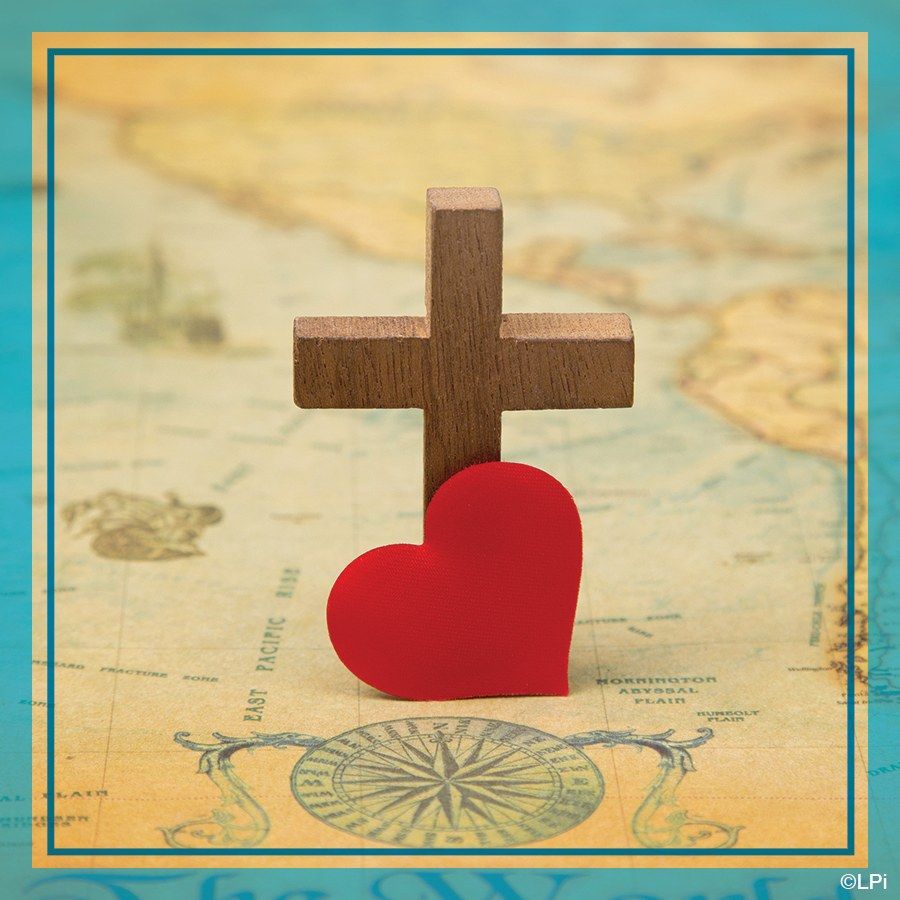
Today the Church throughout the world celebrates the 100th Anniversary of World Mission Sunday. World Mission Sunday was established by Pope Pius XI in 1926 to provide prayer and support for the global missionary efforts of the Church. We will be supporting world missions today in our prayers, and materially through our second collection. Support for missions is appropriate as we near the end of this liturgical year and our journey through Matthew’s Gospel, recalling the very end of that Gospel where Jesus give us his great commission to “Go, therefore, and make disciples of all nations, baptizing them in the name of the Father, and of the Son, and of the Holy Spirit, teaching them to observe all that I have commanded you.” (Mt 28:19-20a) For most of us, when we hear of the mission efforts of the Church, it is something distant for us — people who go to distant lands we’ve never been to, to serve those in need and spread the Gospel, both in word and deed. It feels remote. But the missions are not so remote. In fact, we have missioners in our midst at St. Mary’s: our fellow parishioners John and Cindy Korb. John and Cindy served as lay Maryknoll missioners in Kenya for five years. Although their formal mission in Kenya ended some years ago, I believe their mission continues, as they serve us here at St. Mary’s and in the Oneonta community. Thank you, John and Cindy. You see, the mission fields of Gospel are not so distant, and are just as much here in our own community as they are somewhere else in the world. Amidst great joy, I am sure, mission work also comes with great sacrifice. In 1980, four missionaries serving in El Salvador, a country in the midst of a brutal civil war at the time, were tortured, raped and murdered by members of the Salvadoran National Guard. They included Maryknoll Sisters Ita Ford and Maura Clarke and lay missioner Jean Donovan, and Ursuline Sister Dorthy Kazel, who were providing humanitarian relief and accompaniment to poor communities oppressed by the war. Theirs is a not-so-distant witness of literally giving one’s life for the spread of the Gospel. Martyrdom — the loss of our life for living the Gospel — is not something most of us will be called to do. But the sacrifice of our lives, the sacrifice of our own priorities, our time, our talent and our treasure, in service of living out the Gospel message, is the martyrdom we are called to daily. Our Holy Father, Pope Leo XIV, recently spoke about this, saying: There exists a martyrdom of those who offer their lives in a single moment, and the more hidden martyrdom of those who give their lives day after day. This is exactly what all Christians are called to do: to give our lives with love, every day. Our age needs men and women who have the courage to do good even when it comes at a cost. Draw close to those who are alone, seek out those who have drifted away. Doing good does not always receive recognition and often requires effort, but this is the daily courage of charity. This daily courage of charity begins with the realization and acceptance that our lives are not our own. We so often think that our lives are our own to lead — my priorities for my life. But that’s not the case. Life is a gift to us, given to us generously by our God, who breathed that life into us. Given to us to be given back to God in worship and in self-sacrificing love to one another. This is precisely and ultimately what Jesus commands us in the Gospel, when he says, “repay...to God what belongs to God” (Mt 22:21b). Give back to God what belongs to God . Our daily courage of charity , of love, is no less than the courage to offer our life back to God who has so generously given it to us. May we have the courage to offer our life back to God at this, and every, Eucharist as we come forward to receive Communion, or as we pray at our pews. Then may we have the daily courage to offer our lives in sacrifice to one another as we walk through the doors of this church building and out into the mission fields of the world around us.
By Rev. Christopher Welch • September 27, 2026
In today's parable we meet two brothers; one says he will go and doesn’t, the other says he will not go and does. The listeners decide the second did his father’s will. In life we judge people not by their words but by their actions. Those who act upon their words we honor. We are given second chances to reconsider our words and decide to do what we are asked to do. Too often it is hard to say 'yes' and act upon our 'yes'. This may have been the case with the second brother, but in time he said 'yes' by his actions. I am reminded of a meditation by Michael Quoist: I am afraid of saying "Yes," Lord. Where will you take me? I am afraid of drawing the longer straw, I am afraid of signing my name to an unread agreement, I am afraid of the "yes" that entails other "yeses." And yet I am not at peace. You pursue me, Lord, you besiege me. I seek out the din for fear of hearing you, but in a moment of silence you slip through. I turn from the road, for I have caught sight of you, but at the end of the path you are there awaiting me. Where shall I hide? I meet you everywhere. Is it then impossible to escape you? But I am afraid to say "Yes," Lord. I am afraid of putting my hand in yours, for you hold on to it. I am afraid of meeting your eyes, for you can win me. I am afraid of your demands, for you are a jealous God. I am hemmed in, yet I hide. I am captured, yet I struggle, and I fight knowing that I am defeated. For you are the stronger, Lord, you own the world and you take it from me. When I stretch out my hand to catch hold of people and things, they vanish before my eyes. It's no fun, Lord, I can't keep anything for myself. The flower I pick fades in my hands. My laugh freezes on my lips. The waltz I dance leaves me restless and uneasy. Everything seems empty, Everything seems hollow, You have made a desert around me. I am hungry and thirsty, And the whole world cannot satisfy me. And yet I loved you, Lord; what have I done to you? I worked for you; I gave myself for you. O great and terrible God, What more do you want? * * * Son, I want more for you and for the world. Until now you have planned your actions, but I have no need of them. You have asked for my approval, you have asked for my support, You have wanted to interest me in your work. But don't you see, son, that you were reversing the roles? I have watched you, I have seen your good will, And I want more than you, now. You will no longer do your own works, but the will of your Father in heaven. Say "Yes," son. I need your "yes" as I needed Mary's "yes" to come to earth, For it is I who must do your work, It is I who must live in your family, It is I who must be in your neighborhood, and not you. For it is my look that penetrates, and not yours, My words that carry weight, and not yours, My life that transforms, and not yours. Give all to me, abandon all to me. I need your "yes" to be united with you and to come down to earth, I need your "yes" to continue saving the world! * * * O Lord, I am afraid of your demands, but who can resist you? That your Kingdom may come and not mine, That your will may be done and not mine, Help me to say "Yes." — Michael Quoist in Prayers
By Deacon Paul Cerosaletti • September 20, 2026
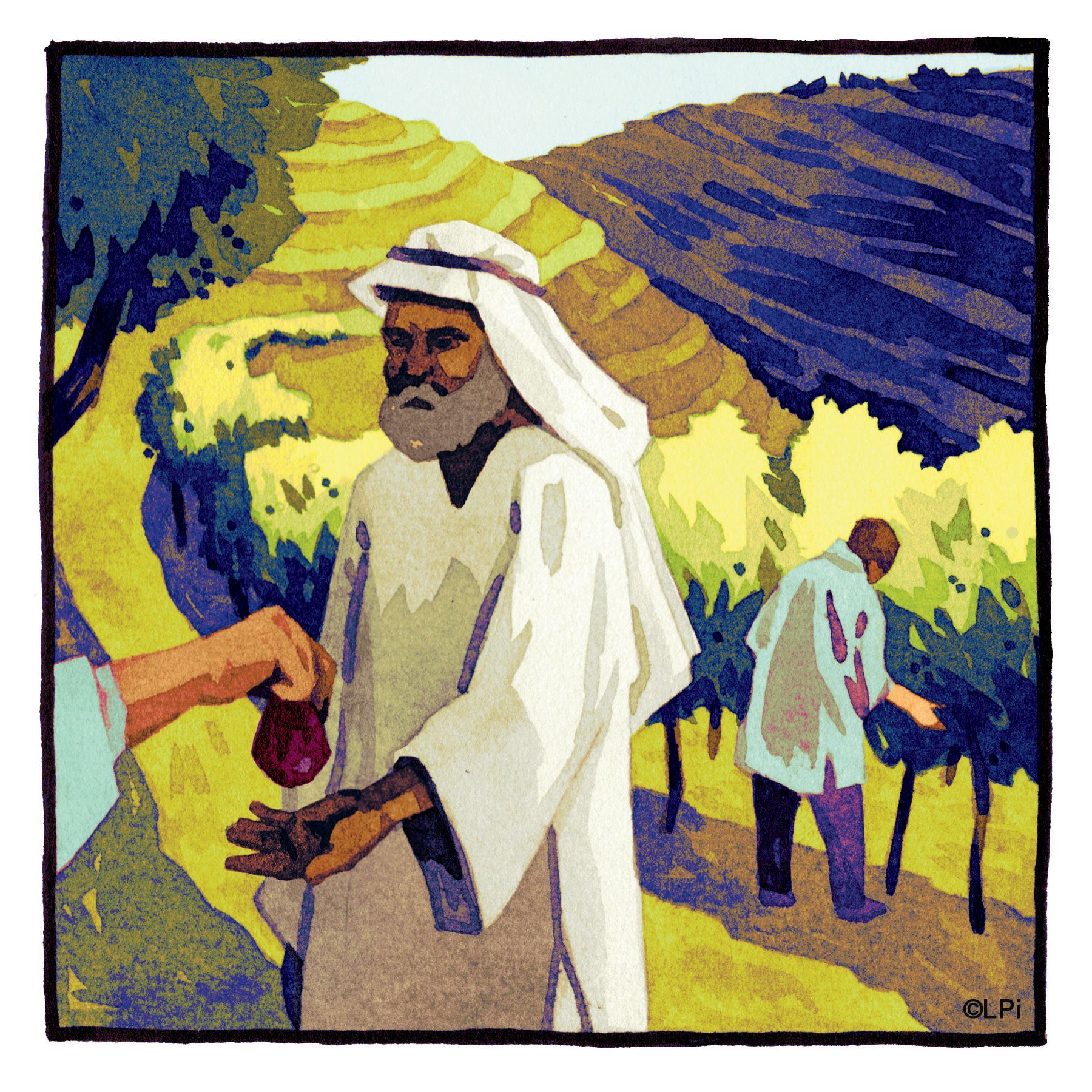
One of my most favorite responses I get from people when I greet them and ask “Hey, how are you?” is the response, “Better than I deserve.” There is something in that response that not only strikes a chord of humility but also of God’s generosity and mercy. Most of us have a strong sense of fairness. The response “better than I deserve” is rooted in our sense of fairness and justice, a sense that might lead us to understand, and perhaps even sympathize, with the reaction of the vineyard workers who labored all day, in the heat of the day, and yet are paid the same amount as those that worked only one hour. How is that right? But the parable we hear in the Gospel is not about what is ‘right and just’. The themes of this parable are about the lavish generosity and mercy of God and , as the Gospel always is, a challenge to examine what is going on in our own hearts — what is happening with our own conversion of heart . These two themes might come alive more for us, as God speaking directly to us, if we change one word in one verse in the parable to express what God intends for us. What if the verse, “Am I not free to do as I wish with my own money?” was instead read, “Am I not free to do as I wish with my own mercy ?” See how that changes things? We are often, so often, fixated on fairness, equity, and justice. There is nothing wrong with those concepts and virtues, except when we fail to live beyond them to generosity and mercy . We have a God who lives beyond justice, in generosity and mercy, and who calls us to do the same. You see, if we stop at fairness and justice, we find ourselves in the same place with the early laborers in the vineyard, exercising judgment on what is equitable, and in so doing end up metering generosity and mercy — not even our own generosity and mercy, but God’s! Now our response becomes, “Better than they deserve…” Our true motivations get called out by the owner of the vineyard when he says, “Are you envious because I am generous?” We end up subject to the same temptation the vineyard laborers experience, the capital sin of envy , the resentment at another’s good fortune. What instead should be the disposition of our hearts? Jesus himself tells us in a related parable about conversion of heart when he says, “There will be more joy in heaven over one sinner who repents than over ninety-nine righteous people who have no need of repentance” (Lk 15:7). Joy! We are called to fill our hearts with Joy at God’s generosity and mercy lavished upon our sisters and brothers who hear and heed a call to conversion of heart in Christ, no matter the stage in their lives; joy over one lost sheep who is found and brought home at the end of the day. Joy is the antidote of envy. Joy is our participation in the generosity and mercy of God, the fitting response to God’s generosity and mercy. And it is nothing short of an exercise of Love, which is to will the good of the other. None of us is deserving of God's generous grace and mercy. We do not merit it, nor should we meter it with our judgement, for we are all in need of it.  How are we? I hope and pray, by the grace of God, with Joy in our hearts, “Better than we deserve.”