April 28, 2024 5th Sunday of Easter B

April 28, 2024

5 th Sunday of Easter B

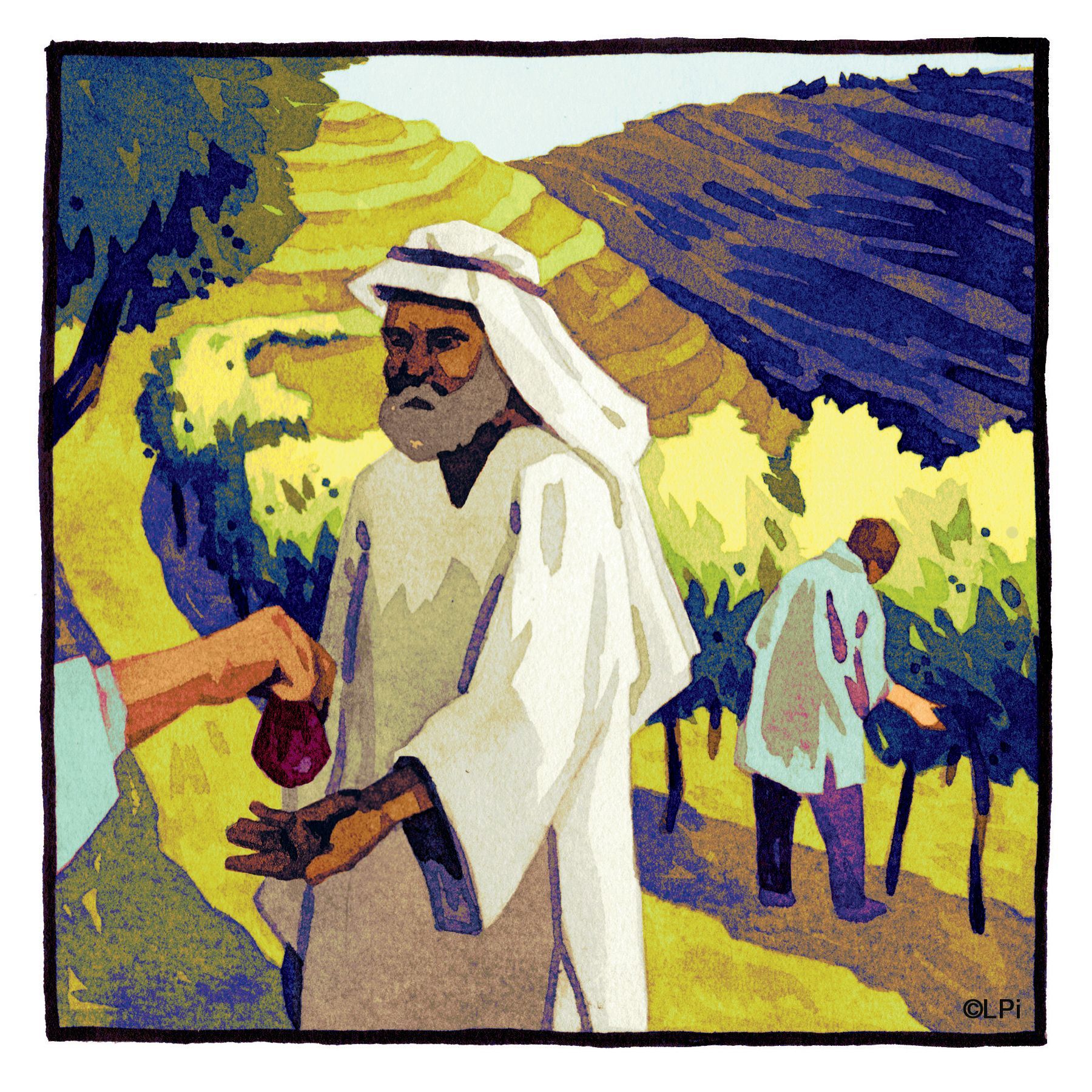
Promise #3 of the 12-step movement is, “ We will not regret the past nor wish to shut the door on it.” These words come to mind when I hear about Saul in today’s first reading.

It must have been difficult to be accepted by the early Christians when he spent so much time in the recent past persecuting the Christians. Now he wishes to proclaim the gospel of Jesus.   Last Sunday we heard how the people piled their cloaks at the feet of a man named Saul as they killed Stephen.

Saul did horrible things in his past. I am sure many had a hard time overlooking what Saul did in the past. I am sure he had many sleepless nights when he regretted his past, yet his past is part of who he was and is. As he was strident in persecuting the Christians in the past, he was strident in preaching the good news in his present. His past is part of who he is. His nature didn’t change, what changed was his cause and his outlook on life.

We all have things in our past that we are not proud of. We all sowed some wild oats.  What we were is not the end of the story. God uses the most broken to accomplish the building up of the kingdom.  It is said, “every sinner has a future, and every Saint has a past.”  What we were in the past is not the whole story. Saul was a single-minded persecutor of the Christians who became a single-minded preacher of the gospel.  His way of operating has not changed, just what his goal is has changed.

Our past has formed each one of us into who we are. We can’t change the past, we may regret it, but we can’t change it. The best we can do is strive to do better in the future. It is often hard to put behind us our past. Some will judge us according to what we did in the past. Some will not see how we are different.

 It takes someone willing to see beyond our past and look to today and the future.

Barnabas did this for Saul. Barnabas was able to see the man who was there at the moment. He didn’t’ t let the past sway him. He was willing to take Saul at his word and trust that the spirit was at work in him and that he was a new man.

Today we may want to consider what is in our past that we wish to put behind us.  Who has been a Barnabus for us? Who was willing to give us the benefit of the doubt.

Who is a Saul for us in our life? Who are the ones who have a past? Are we willing to let them try on a new way of life, or do we prejudge them according to their past? Remember the saints, “Every sinner has a future, every saint has a past”.

I am not sure I would have liked Paul, but I am thankful for him and his ministry.  Without Paul, few of us would know about the gospel.

As Fr. Scott shared with us this week, each type of person has a sin; sin doesn’t’ t define the person. Our pet sin can be a deficit and an asset for the way we interact with the world. So, it was with Paul. He was, in his past, and after he met Jesus on the road to Damascus, a man with a mission.   He brought all he was and is to his mission to spread the gospel. 

Saul may have tried to get away from his past, he was even given a new name. A new name accompanies a new mission. Abram became Abraham, Saul became Paul. The pope takes on a new name Cardinal Bergoglio becomes Francis.

It must have been hard for Paul and the early church. There were many growth pains in the early church. The Holy Spirit came to help the disciples and apostles form the church. The church was and is made up of many who have a past. Our past is not the end of the story.  As broken as we may be, we are created in the image and likeness of our God.  Therefore, we are created and loved by our God and that makes all the difference in the world.
By Fr. Christopher Welch February 1, 2026
THE SEARCH by Shel Silverstein I went to find a pot of gold That's waiting where the rainbow ends. I searched and searched and searched and searched And searched and searched, and then— There it was, deep in the grass, Under an old and twisty bough. It's mine, it's mine, it's mine at last.... What do I search for now? So often we look at life as a destination. How often as children did we bug the driver of the car with the endless question, “Are we there yet?” The spiritual masters remind us that life is not about the destination, but the journey. How much we would miss if we didn’t take the journey. The Prophet Zephaniah encourages us to “seek the Lord”. One way we seek the Lord is by our poverty of spirit. We are blessed as we begin to recognize that I am not in charge, God is the one in charge. I let God set the agenda. One aspect of wisdom is knowing I am not wise. St. Paul, in his letter to the community at Corinth, speaks about true wisdom: God chose the foolish of the world to shame the wise, and God chose the weak of the world to shame the strong. Sometimes it is the foolish who get it: the foolish see that the journey is the goal, not the pot of gold under the rainbow. The challenge is learning to live day by day and let God be the one in charge. Sometimes God acts to remind us of who is in charge. The storm this week reminded us that we are not in charge. Our plans needed to be changed to address the issues of the storm. We had a choice; we could have cursed the storm or adjusted our expectations. We are on a new journey. The pot of God may have hidden in the people and projects we addressed this week. In a few short weeks we will begin the season of Lent, a journey we take toward the most important days of the year. Holy Week lays out for us the mysteries of our faith: the Passion, Death, and Resurrection of our Lord. How will we take this journey? How will we seek the Lord? Lent is a search, not for pots of gold, but for a deeper relationship with the Lord. I went to find a pot of gold That's waiting where the rainbow ends. I searched and searched and searched and searched And searched and searched, and then— There it was, deep in the grass, Under an old and twisty bough. It's mine, it's mine, it's mine at last.... What do I search for now?
By Deacon Paul Cerosaletti January 25, 2026
There are two important, related, and relevant themes in the readings we hear today: the Light of Christ and the Call of Christ in our lives. The first reading from the prophet Isaiah, which we heard not long ago at our Christmas Masses, speaks and prophesies about the Light of the Messiah, Christ, who is to come into the world. The time at which Isaiah writes is the time of the Assyrian exile, when the northern areas of ancient Israel, including the lands of Naphtali and Zebulon, were invaded by the Assyrians who carried off many of the inhabitants into exile. This was the land and people of gloom and darkness that the prophet Isaiah writes about, and prophesies that from the land, in the midst of their gloom and darkness, a great Light would shine. We believe that Isaiah’s Messianic prophecy is fulfilled in Christ, who comes into the world as a Light to all nations, and comes as Light not only for the particular people of a particular time, but for all people (all nations) for all of time . We believe and we hope in Christ’s coming into the gloom and darkness of our lands and lives today . Christ the Light, Christ our Hope, breaks into our lives over and over and over again, in little and sometimes big ways, as with Him, we die to an old way of life of sin and rise, over and over, to a new life in Christ. It is Christ who, on Mt. Calvary, smashes the yoke and pole of sin and death, and the rod of the taskmaster who chains us to that yoke and pole. It is, as Bishop Robert Barron notes, Christ on Calvary who, “swallowed up all of our dysfunction in the ever great mercy of God.” It is His Light that Christ calls us into, to become one with. We hear of the first disciples’ call from Jesus in the Gospel passage, and Matthew reminds us of Isaiah’s prophecy of Christ as the Great Light. In this we may be reminded of another of Isaiah’s prophecies: So shall my word be that goes forth from my mouth; It shall not return to me empty, but shall do what pleases me, achieving the end for which I sent it. (Is 55:11) We see how, literally, Christ, the Word of God, calls the disciples. Christ’s call, the Divine Fisherman’s casted line, does not come back empty, does it? Repeatedly He casts, and repeatedly His Word lands fish. Christ too casts His line for us. He casts his line into the darkness and gloom of our world and lives today. He casts it, repeatedly, breaking into the day-to-day busyness, caught-up-in-our-own worldliness, until we notice his Light Line and Life Line, and respond to His call. His Word will not return to Him empty, but lead us to his Boat, to His Shore, and into His Light. Thanks be to God! St. John Henry Newman, a former Anglican priest, convert to Catholicism, and Cardinal of the Church in the 1800s, reflected eloquently on God’s Divine Call of us throughout our lives: For in truth we are not called once only, but many times; all though our life Christ is calling us. He called us first in Baptism; but afterwards also; whether we obey his voice or not, he graciously calls us still. If we fall from our Baptism, He calls us to repent; If we are striving to fulfill our calling, He calls us from grace to grace, and from holiness to holiness, while life is given us…we all are in course of calling, on and on, from one thing to another, having no resting place but mounting towards our eternal rest… Lead, Kindly Light St. John Henry Cardinal Newman Lead, Kindly Light, amid the encircling gloom, Lead Thou me on; The night is dark, and I am far from home, Lead Thou me on. Keep Thou my feet; I do not ask to see the distant scene; one step enough for me. I was not ever thus, nor prayed that Thou shouldst lead me on; I loved to choose and see my path; but now Lead Thou me on. I loved the garish day, and, spite of fears, pride ruled my will; Remember not past years. So long Thy power hath blessed me, sure it still Will lead me on. O'er moor and fen, o'er crag and torrent, till The night is gone; And with the morn those angel faces smile, Which I have loved long since, and lost awhile.
By Rev. Christopher Welch January 18, 2026
Now that we are beyond the Christmas season, we are returning to normal. In our first reading, Isaiah reminds us that we are servants. In this new year of grace, we are called to be servants. We are learning about humility; being humble means thinking less of myself and more of others. Is this what it means to be a servant? We hear the words of Isaiah as we begin the annual week of Christian unity. It is wonderful that men and women from different denominations can come together in prayer. This afternoon many will gather to remember the life and witness of Dr. Martin Luther King, Jr. Dr. King was a true servant to the mission of justice for all God’s people. Dr. King was a Christian who acted as a servant to the kingdom of God. Dr. King was a dreamer who shared his dream with the world. I have a dream that my four little children will one day live in a nation where they will not be judged by the color of their skin but by the content of their character. I have a dream . . . I have a dream that one day in Alabama, with its vicious racists, with its governor having his lips dripping with the words of interposition and nullification, one day right there in Alabama little black boys and black girls will be able to join hands with little white boys and white girls as sisters and brothers. I have a dream today . . . This will be the day when all of God’s children will be able to sing with new meaning. “My country, ’tis of thee, sweet land of liberty, of thee I sing. Land where my fathers died, land of the pilgrim’s pride, from every mountain side, let freedom ring.” And if America is to be a great nation, this must become true. So let freedom ring from the prodigious hilltops of New Hampshire. Let freedom ring from the mighty mountains of New York. Let freedom ring from the heightening Alleghenies of Pennsylvania. Let freedom ring from the snowcapped Rockies of Colorado. Let freedom ring from the curvaceous slopes of California. Being a servant of the gospel means being a dreamer who works to make the dream a reality. With our brothers and sisters of many faiths, we are servants of the kingdom of God. Like John the Baptist, we prepare the way for the coming of God’s kingdom. Each one of us, have been baptized and received the gift of the Holy Spirit. With the spirit to help us we are servants of the kingdom of God.