Third Sunday in Ordinary Time, Year A

There are two important, related, and relevant themes in the readings we hear today:  the Light of Christ and the Call of Christ in our lives.   


The first reading from the prophet Isaiah, which we heard not long ago at our Christmas Masses, speaks and prophesies about the Light of the Messiah, Christ, who is to come into the world.  The time at which Isaiah writes is the time of the Assyrian exile, when the northern areas of ancient Israel, including the lands of Naphtali and Zebulon, were invaded by the Assyrians who carried off many of the inhabitants into exile.  This was the land and people of gloom and darkness that the prophet Isaiah writes about, and prophesies that from the land, in the midst of their gloom and darkness, a great Light would shine.  We believe that Isaiah’s Messianic prophecy is fulfilled in Christ, who comes into the world as a Light to all nations, and comes as Light not only for the particular people of a particular time, but for all people (all nations) for all of time.  We believe and we hope in Christ’s coming into the gloom and darkness of our lands and lives today.  Christ the Light, Christ our Hope, breaks into our lives over and over and over again, in little and sometimes big ways, as with Him, we die to an old way of life of sin and rise, over and over, to a new life in Christ.  It is Christ who, on Mt. Calvary, smashes the yoke and pole of sin and death, and the rod of the taskmaster who chains us to that yoke and pole.  It is, as Bishop Robert Barron notes, Christ on Calvary who, “swallowed up all of our dysfunction in the ever great mercy of God.”


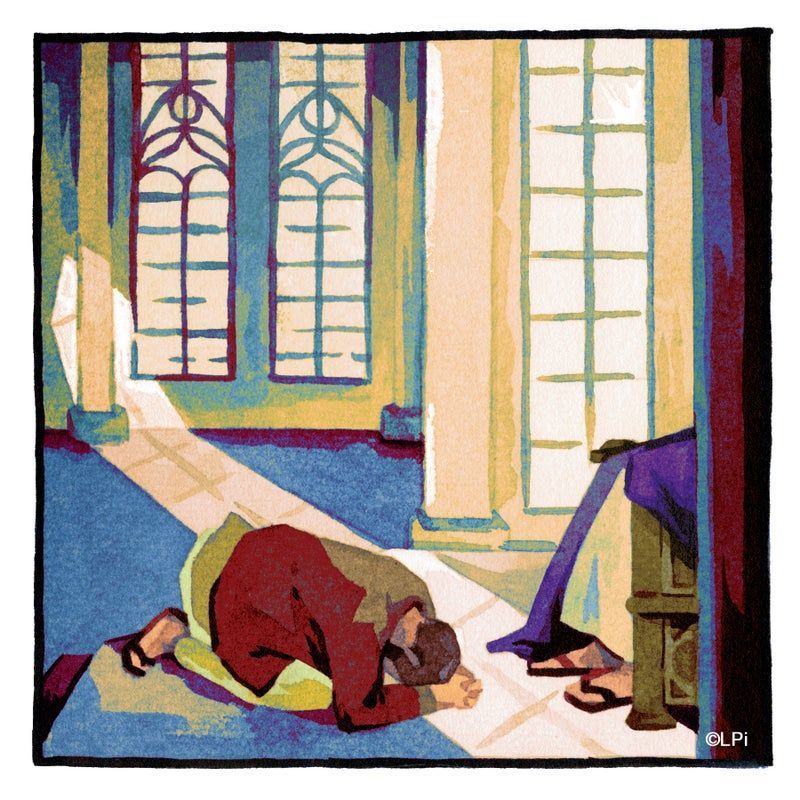
It is His Light that Christ calls us into, to become one with.  We hear of the first disciples’ call from Jesus in the Gospel passage, and Matthew reminds us of Isaiah’s prophecy of Christ as the Great Light.  In this we may be reminded of another of Isaiah’s prophecies: 


So shall my word be

that goes forth from my mouth;

It shall not return to me empty,

but shall do what pleases me,

achieving the end for which I sent it. (Is 55:11)


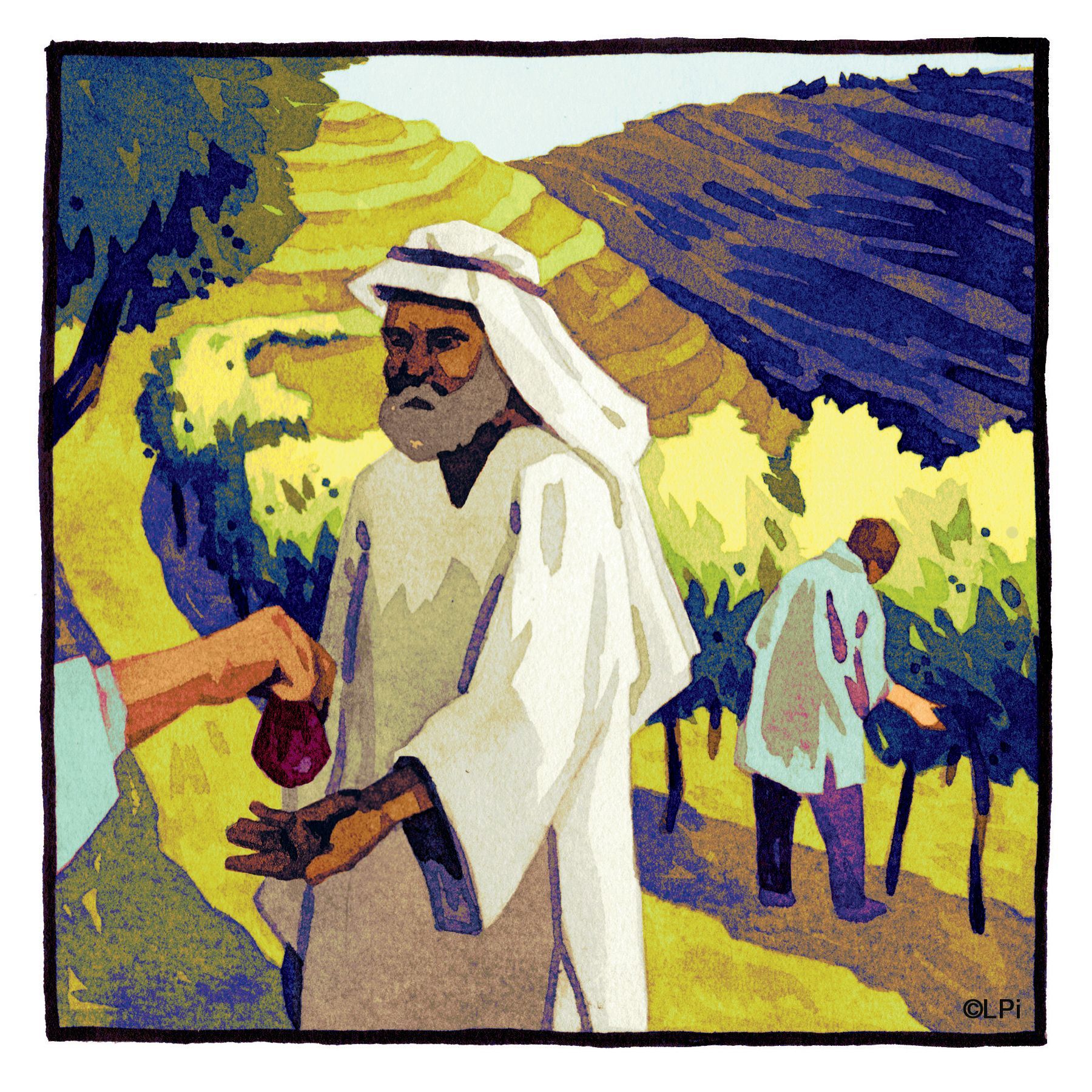
We see how, literally, Christ, the Word of God, calls the disciples.  Christ’s call, the Divine Fisherman’s casted line, does
not come back empty, does it?  Repeatedly He casts, and repeatedly His Word lands fish.  Christ too casts His line for us.  He casts his line into the darkness and gloom of our world and lives today.  He casts it, repeatedly, breaking into the day-to-day busyness, caught-up-in-our-own worldliness, until we notice his Light Line and Life Line, and respond to His call.  His Word will not return to Him empty, but lead us to his Boat, to His Shore, and into His Light.  Thanks be to God!


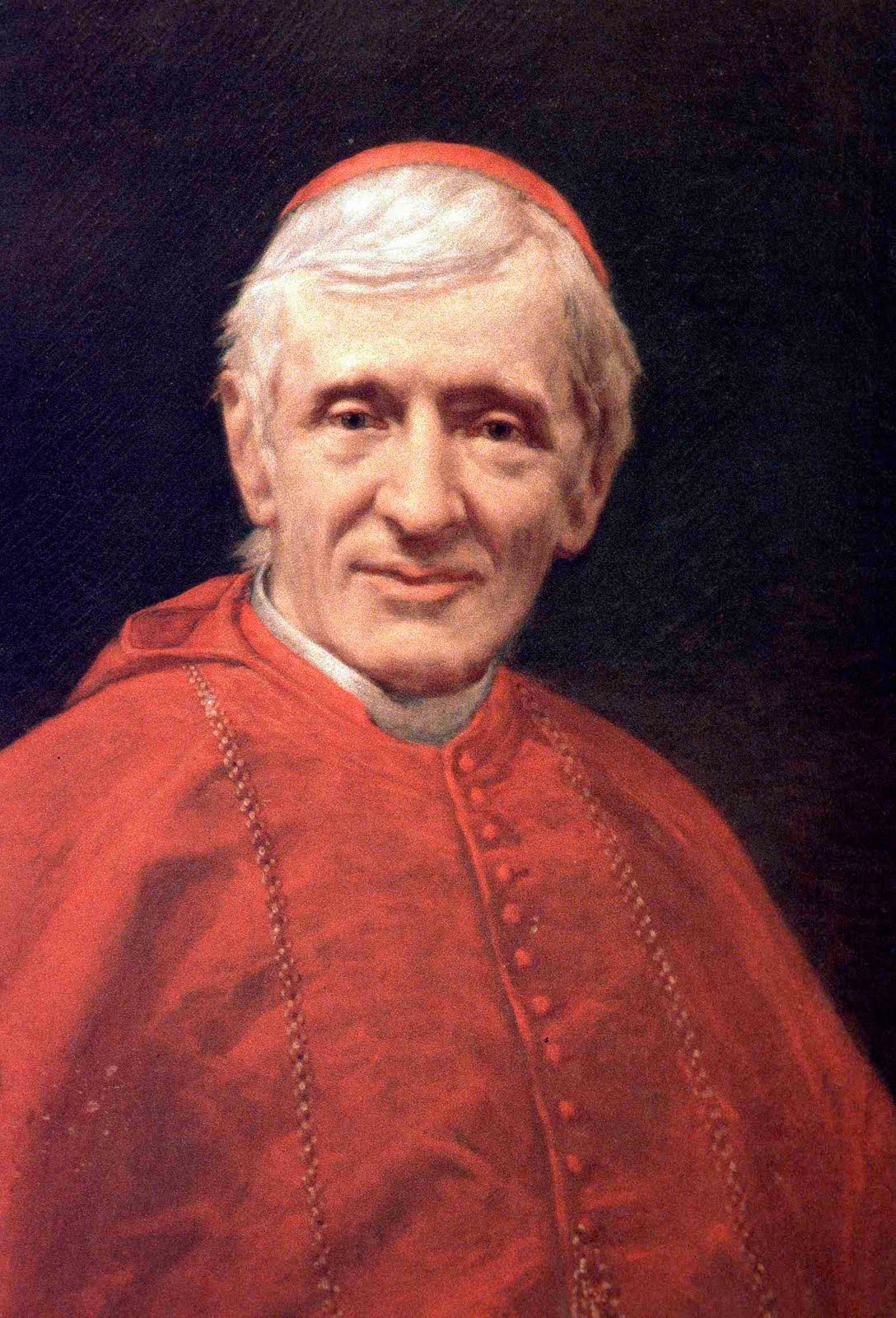
St. John Henry Newman, a former Anglican priest, convert to Catholicism, and Cardinal of the Church in the 1800s, reflected eloquently on God’s Divine Call of us throughout our lives: 


For in truth we are not called once only, but many times; all though our life Christ is calling us.  He called us first in Baptism; but afterwards also; whether we obey his voice or not, he graciously calls us still.  If we fall from our Baptism, He calls us to repent; If we are striving to fulfill our calling, He calls us from grace to grace, and from holiness to holiness, while life is given us…we all are in course of calling, on and on, from one thing to another, having no resting place but mounting towards our eternal rest…


Lead, Kindly Light

St. John Henry Cardinal Newman


Lead, Kindly Light, amid the encircling gloom,

Lead Thou me on;

The night is dark, and I am far from home,

Lead Thou me on.

Keep Thou my feet;

I do not ask to see the distant scene;

one step enough for me.


I was not ever thus, nor prayed that

Thou shouldst lead me on;

I loved to choose and see my path; but now

Lead Thou me on.

I loved the garish day, and, spite of fears, pride ruled my will; 

Remember not past years.


So long Thy power hath blessed me, sure it still

Will lead me on.

O'er moor and fen, o'er crag and torrent, till

The night is gone;

And with the morn those angel faces smile,

Which I have loved long since, and lost awhile.

By Rev. Christopher Welch June 21, 2026
The last two popes chose names that pointed out what their main concern in their ministry would be. Pope Francis took the name of a man who advocated for the poor among us. Pope Leo XIV took the name of the pope who advocated for dignity of the workers in the world. Pope Leo XIII wrote the first encyclical speaking of the dignity of workers. His encyclical Rerum Novarum spoke of how the church should be an instrument for change in the world. Pope Leo XIV, in his encyclical Magnifica Humanitas , addresses his concern for the use of AI in our world. AI used in the correct way can be of benefit to humanity. Used in the wrong way, AI can lead to taking away the humanity of people. He uses two images to speak of AI. AI used in the wrong way can be like the Tower of Babel. The Tower of Babel, as found in the book of Genesis, was a tower built by people who sought glory for themselves. They had a single technology, a single goal all directed toward themselves without a concern for God. They started out united and the project caused division. Here is how Pope Leo puts it in his encyclical: The result is not unity, but dispersion. Babel thus reveals the limits of any effort that, however grandiose, arises from self-affirmation, sacrifices human dignity for efficiency and aspires to reach heaven without God’s blessing. The second image is taken from the book of Nehemiah, where the walls of Jerusalem were rebuilt. This is the image for the correct use of AI -- a technology that unites people, with God at the center, and preserves the dignity of the human person. Again, Pope Leo: It is an undertaking with God at the center, which rebuilds relationships before rebuilding with stones. Thus, ancient Jerusalem rediscovers a common language -- not one of uniformity, but one of communion, namely the harmony that arises when all persons assume their own role and recognize that their strength comes from the Lord. The pope expresses concern that AI may be used in ways that deny the unique nature of humans. As we go forward, we need to decide what we will build: will we build a Tower of Babel or the city of Jerusalem? The Pope ends his reflections by giving Mary’s song, the Magnificat , as the example on how we go forward: With the same faith as Mary, let us become “weavers of hope” in our world, sharing who we are and what we have, so that the presence of Jesus may grow among us and his Kingdom take shape. In the humble fidelity of daily life, even the era of AI can become a time in which the Holy Spirit brings about the civilization of love in our lives. Indeed, the Lord continues to make all things new and offers every era the possibility of becoming part of salvation history in the light of the Incarnation. I entrust our desire to the Mother of Christ, to the Woman of the Magnificat, that she may guide our steps through this time of change and preserve in each of us true faith in the Gospel, so that we may bear witness to the grandeur of humanity, in which God has made his dwelling.
By Deacon Paul Cerosaletti June 21, 2026
Jesus’ message in the Gospel passage we hear today is one of encouragement for the disciples. He has three main messages: First, proclaim the Gospel ; second, “ Do not be afraid ” — three times in this passage Jesus tells them literally “do not be afraid” — and third, God is with them; they are not abandoned . It's easy to hear and understand these messages in the context of the early Christians being persecuted and even martyred for being Christians and living the Gospel. Christians were a super-minority group that had beliefs challenging the majority. But that is not our experience today and stories of the witness of those Christians for the faith centuries and millennia ago might not ring with relevance in our contemporary experience — or do they? In 1999, our country experienced the horrific tragedy of the Columbine High School shooting. In the midst of that massacre one of the students, a 17-year-old girl named Valeen Schnurr, who had already been shot, was asked by one of the shooters if she believed in God. She was afraid to say ‘yes’, fearing they would shoot her again, but. afraid she was already dying and not wanting to deny her faith, did not want to say ‘no’. So she said, “Yes, I do believe in God.” Asked by the shooter, “Why?” she said, “Because I do, and because my mom and dad have taught me.” Would any of us have the courage to respond similarly? I pray so. What an incredible modern-day witness to the faith we profess when we say, “I believe in God the Father Almighty...”. And what a witness to the faith we profess in the Rite of Christian Baptism of infants when we pray for the parents, saying, “you are this child’s first teachers of the faith; may you be the best of teachers.” Persecution takes many forms, from oppression to repression to physical violence, kidnappings and, yes, even killings. Many Christians around the world still experience persecution, especially in North Korea, the Middle East, other parts of Asia, and in several countries in Africa. We have parishioners at St. Mary’s with relatives in Syria, who report to them of the struggles of the Christian church there, where the Christian population is about a quarter to a third of the size it was 15 years ago. Many have fled to be able to live and profess their belief in our Lord Jesus Christ. Would we have the courage to persist in practicing our faith where it is difficult to do so, or the courage to leave home to find a place where we can? As real as this persecution for the faith is in the world today, it is not our contemporary experience in the United States. For this we can be grateful to our county’s founding fathers and the freedom of religion won for us and preserved to this day. This does not mean, however, that we are insulated from persecution here and now in the US for proclaiming and living the Gospel truths Jesus gave us. For us in the United States today, it is more likely to take the form of ridicule for standing up for the Gospel message of love, compassion, peace and mercy. We might experience it in standing up for the poor and marginalized, whom many do not see as deserving of support and mercy, seeing their situations as just consequences of their own bad decisions. We might experience it in advocating for peace, amidst clamor for war. When military action in Venezuela and the war in Iran began earlier this year, our Holy Father Pope Leo XIV spoke out publicly and with increasing directness in advocating for peace and against the growing use of military force in resolving situations. Pope Leo was not expressing his opinions but proclaiming and applying the Gospel message of peace, communion, and respect for human life to our current contemporary situation, as shepherd of the Gospel. For that he was roundly criticized and ridiculed by leaders of our country. Yet he had the courage to speak these Gospel truths to power, believing he has no other mandate, saying “As a shepherd, I cannot be in favor of war”. What are the ways we might be called to proclaim the Gospel in the face of persecution? How do our lives make that proclamation, using words when necessary? Do we have the courage to make that proclamation, the courage of so many martyrs, the courage of Valeen Schnurr, the courage of Pope Leo XIV, the courage of so many of our brothers and sisters around us? And can we find that courage in Jesus’ encouragement : “Do not be afraid. I am with you always.”
By Rev. Christopher Welch June 14, 2026
Our psalm today says: We are his people: the sheep of his flock . Once again, we hear how God is the good shepherd. We meet a good shepherd in the recent movie The Sheep Detectives . The movie is a mystery, so I won’t destroy the mystery. The one thing I thought was interesting was how when the sheep dealt with a difficult situation, they decided to forget about it. This reminded me of the situation in our culture -- how we like to avoid pain, pain of any kind. One of the hallmarks of our faith is the cross. The cross is a sign of hope and of pain. In life we are asked to take up our cross and carry it. If we choose to avoid the cross, we avoid pain and in doing so we avoid things that make us who we are. On the other side of the cross is new life and on the other side of pain is a new understanding of life. Those who embrace the pain find they are more compassionate people. Most people will tell you they do not like Lent. Lent is a season where we reflect upon our brokenness and our need for our God. On Ash Wednesday, the day when we are reminded of our mortality, the church is bursting at the seams. During Holy Week, few will come to church on Good Friday, the day we venerate the cross, but many will come on Easter Sunday to celebrate the new life of the resurrection. In doing do we avoid the cross and pain. We skip the cross and go right to the empty tomb. Those in recovery will tell you that the pain of allowing a higher power to be in charge is the path to serenity and a new way of life. The cross can help us to focus on the other rather than ourselves. It has been said, “No pain, no gain.” Part of our difficulties as followers of the Good Shepherd is that we wish to forget the difficult parts of the cross. I would like to be a sheep who chooses to forget what is painful to recall. We take this torture device, the cross, and wear it on chains around our necks or we display them on our walls. We take the pain of life, the pain of the cross, and we praise God’s kindness to us. Or in the words of Psalm 100, the psalm for today: The LORD is good; his kindness endures forever, and his faithfulness to all generations.