Fourth Sunday in Ordinary Time, Year A


THE SEARCH

by Shel Silverstein 


I went to find a pot of gold

That's waiting where the rainbow ends.

I searched and searched and searched and searched

And searched and searched, and then—

There it was, deep in the grass,

Under an old and twisty bough.

It's mine, it's mine, it's mine at last....

What do I search for now?
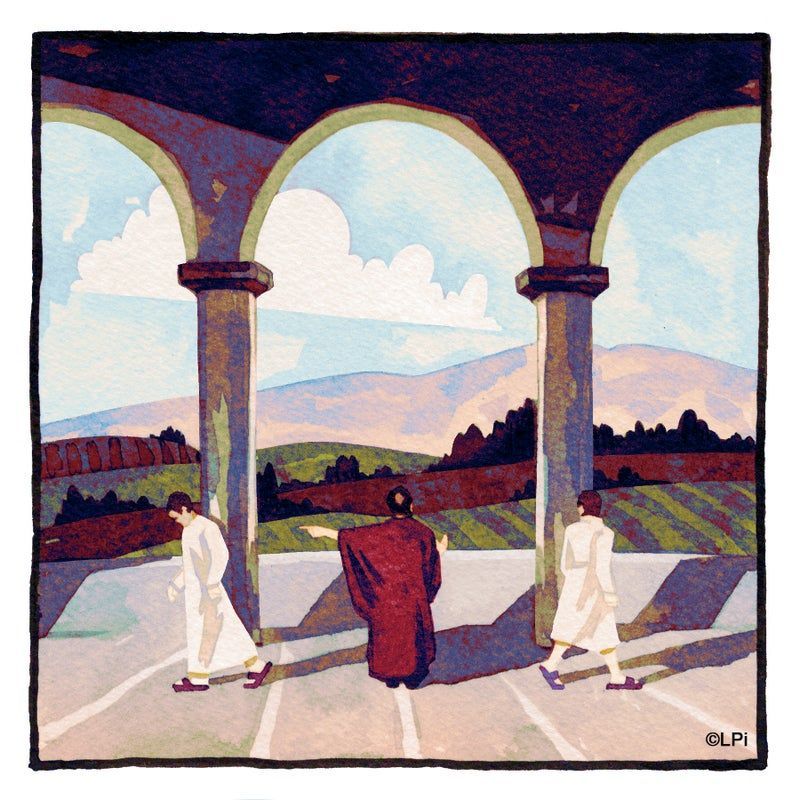


So often we look at life as a destination.  How often as children did we bug the driver of the car with the endless question, “Are we there yet?”


The spiritual masters remind us that life is not about the destination, but the journey.  How much we would miss if we didn’t take the journey.


The Prophet Zephaniah encourages us to “seek the Lord”.  One way we seek the Lord is by our poverty of spirit.  We are blessed as we begin to recognize that I am not in charge, God is the one in charge.  I let God set the agenda.  One aspect of wisdom is knowing I am not wise.


St. Paul, in his letter to the community at Corinth, speaks about true wisdom:


God chose the foolish of the world to shame the wise,

and God chose the weak of the world to shame the strong.


Sometimes it is the foolish who get it: the foolish see that the journey is the goal, not the pot of gold under the rainbow.  The challenge is learning to live day by day and let God be the one in charge. Sometimes God acts to remind us of who is in charge.  The storm this week reminded us that we are not in charge.  Our plans needed to be changed to address the issues of the storm.  We had a choice; we could have cursed the storm or adjusted our expectations.  We are on a new journey.  The pot of God may have hidden in the people and projects we addressed this week.


In a few short weeks we will begin the season of Lent, a journey we take toward the most important days of the year.  Holy Week lays out for us the mysteries of our faith: the Passion, Death, and Resurrection of our Lord.


How will we take this journey?  How will we seek the Lord?


Lent is a search, not for pots of gold, but for a deeper relationship with the Lord.


I went to find a pot of gold

That's waiting where the rainbow ends.

I searched and searched and searched and searched

And searched and searched, and then—

There it was, deep in the grass,

Under an old and twisty bough.

It's mine, it's mine, it's mine at last....

What do I search for now?


By Rev. Christopher Welch • September 24, 2026
In today's parable we meet two brothers; one says he will go and doesn’t, the other says he will not go and does. The listeners decide the second did his father’s will. In life we judge people not by their words but by their actions. Those who act upon their words we honor. We are given second chances to reconsider our words and decide to do what we are asked to do. Too often it is hard to say 'yes' and act upon our 'yes'. This may have been the case with the second brother, but in time he said 'yes' by his actions. I am reminded of a meditation by Michael Quoist: I am afraid of saying "Yes," Lord. Where will you take me? I am afraid of drawing the longer straw, I am afraid of signing my name to an unread agreement, I am afraid of the "yes" that entails other "yeses." And yet I am not at peace. You pursue me, Lord, you besiege me. I seek out the din for fear of hearing you, but in a moment of silence you slip through. I turn from the road, for I have caught sight of you, but at the end of the path you are there awaiting me. Where shall I hide? I meet you everywhere. Is it then impossible to escape you? But I am afraid to say "Yes," Lord. I am afraid of putting my hand in yours, for you hold on to it. I am afraid of meeting your eyes, for you can win me. I am afraid of your demands, for you are a jealous God. I am hemmed in, yet I hide. I am captured, yet I struggle, and I fight knowing that I am defeated. For you are the stronger, Lord, you own the world and you take it from me. When I stretch out my hand to catch hold of people and things, they vanish before my eyes. It's no fun, Lord, I can't keep anything for myself. The flower I pick fades in my hands. My laugh freezes on my lips. The waltz I dance leaves me restless and uneasy. Everything seems empty, Everything seems hollow, You have made a desert around me. I am hungry and thirsty, And the whole world cannot satisfy me. And yet I loved you, Lord; what have I done to you? I worked for you; I gave myself for you. O great and terrible God, What more do you want? * * * Son, I want more for you and for the world. Until now you have planned your actions, but I have no need of them. You have asked for my approval, you have asked for my support, You have wanted to interest me in your work. But don't you see, son, that you were reversing the roles? I have watched you, I have seen your good will, And I want more than you, now. You will no longer do your own works, but the will of your Father in heaven. Say "Yes," son. I need your "yes" as I needed Mary's "yes" to come to earth, For it is I who must do your work, It is I who must live in your family, It is I who must be in your neighborhood, and not you. For it is my look that penetrates, and not yours, My words that carry weight, and not yours, My life that transforms, and not yours. Give all to me, abandon all to me. I need your "yes" to be united with you and to come down to earth, I need your "yes" to continue saving the world! * * * O Lord, I am afraid of your demands, but who can resist you? That your Kingdom may come and not mine, That your will may be done and not mine, Help me to say "Yes." — Michael Quoist in Prayers
By Deacon Paul Cerosaletti • September 20, 2026
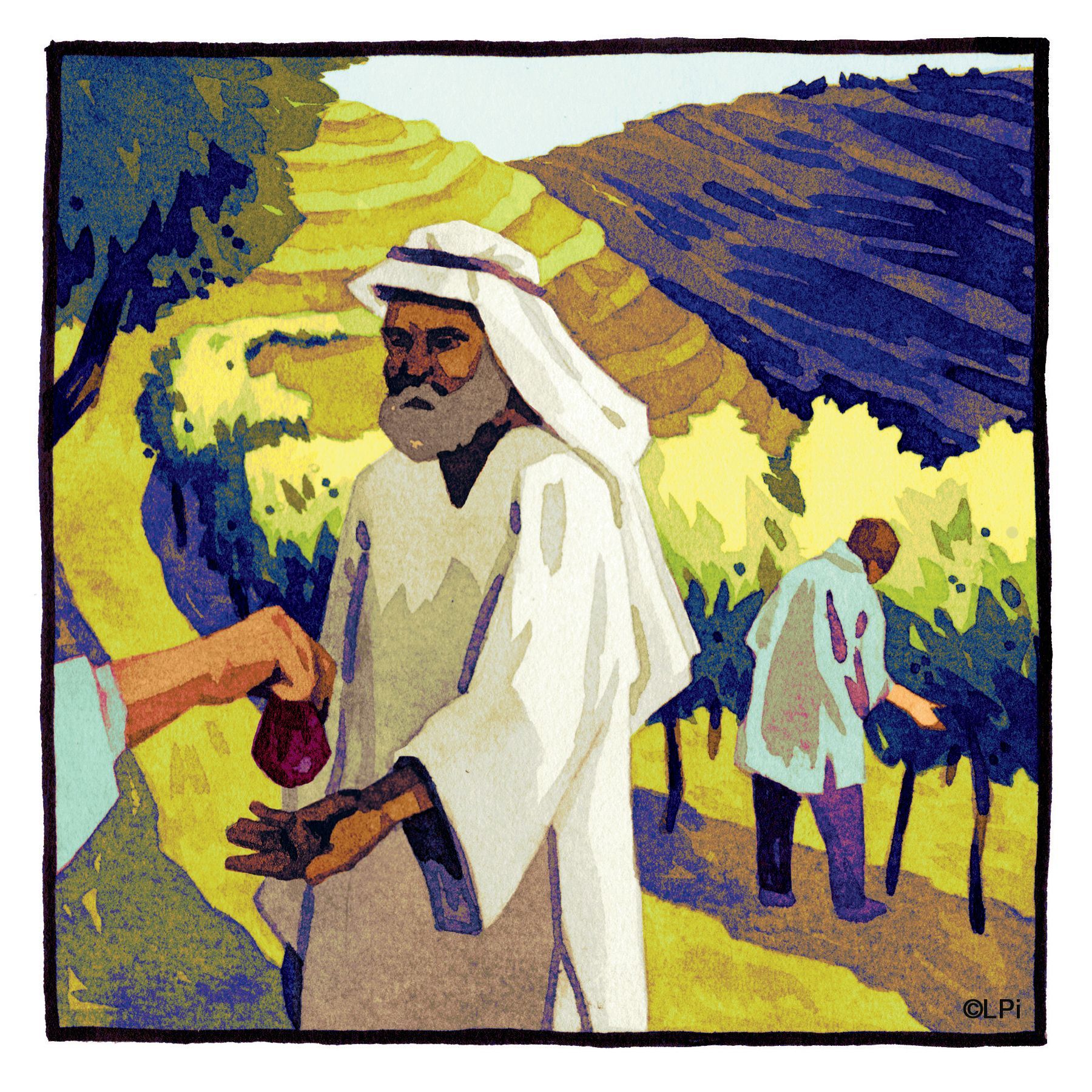
One of my most favorite responses I get from people when I greet them and ask “Hey, how are you?” is the response, “Better than I deserve.” There is something in that response that not only strikes a chord of humility but also of God’s generosity and mercy. Most of us have a strong sense of fairness. The response “better than I deserve” is rooted in our sense of fairness and justice, a sense that might lead us to understand, and perhaps even sympathize, with the reaction of the vineyard workers who labored all day, in the heat of the day, and yet are paid the same amount as those that worked only one hour. How is that right? But the parable we hear in the Gospel is not about what is ‘right and just’. The themes of this parable are about the lavish generosity and mercy of God and , as the Gospel always is, a challenge to examine what is going on in our own hearts — what is happening with our own conversion of heart . These two themes might come alive more for us, as God speaking directly to us, if we change one word in one verse in the parable to express what God intends for us. What if the verse, “Am I not free to do as I wish with my own money?” was instead read, “Am I not free to do as I wish with my own mercy ?” See how that changes things? We are often, so often, fixated on fairness, equity, and justice. There is nothing wrong with those concepts and virtues, except when we fail to live beyond them to generosity and mercy . We have a God who lives beyond justice, in generosity and mercy, and who calls us to do the same. You see, if we stop at fairness and justice, we find ourselves in the same place with the early laborers in the vineyard, exercising judgment on what is equitable, and in so doing end up metering generosity and mercy — not even our own generosity and mercy, but God’s! Now our response becomes, “Better than they deserve…” Our true motivations get called out by the owner of the vineyard when he says, “Are you envious because I am generous?” We end up subject to the same temptation the vineyard laborers experience, the capital sin of envy , the resentment at another’s good fortune. What instead should be the disposition of our hearts? Jesus himself tells us in a related parable about conversion of heart when he says, “There will be more joy in heaven over one sinner who repents than over ninety-nine righteous people who have no need of repentance” (Lk 15:7). Joy! We are called to fill our hearts with Joy at God’s generosity and mercy lavished upon our sisters and brothers who hear and heed a call to conversion of heart in Christ, no matter the stage in their lives; joy over one lost sheep who is found and brought home at the end of the day. Joy is the antidote of envy. Joy is our participation in the generosity and mercy of God, the fitting response to God’s generosity and mercy. And it is nothing short of an exercise of Love, which is to will the good of the other. None of us is deserving of God's generous grace and mercy. We do not merit it, nor should we meter it with our judgement, for we are all in need of it.  How are we? I hope and pray, by the grace of God, with Joy in our hearts, “Better than we deserve.”
By Rev. Christopher Welch • September 13, 2026
In the Masterpiece production of The Count of Monte Cristo , the main character is sent to prison; there he meets another prisoner who advises him, “If you seek for revenge, you should first dig two graves.” After the count achieves revenge he tells his friend, “The prisoner was right.” She responds, “Love can heal.” The readings today speak about forgiveness. Forgiveness is about choosing to love. When we forgive the other, we may not receive what we hoped for from the other. Forgiveness or love are not about the other person, but about me. There are many I will choose to love whom I do not like. Love is not simply about feelings, but love is a choice to forgive the other, means not hearing the words “I was wrong” or “I forgive you.” The choice to love may not change the other, but it will change me. One reason Jesus tells Peter to forgive 7 times 70 is that it may take time for the forgiveness to have an effect upon him. Jesus is familiar with the words of Sirach: hate not your neighbor; remember the Most High’s covenant, and overlook faults (Sir 28:7). Sometimes people will ask me why such and such is allowed to act as they do. I find myself reminding them that it is God who judges. King David knew he had done wrong, yet he was able to write the words of Psalm 103 — The Lord is kind and merciful, slow to anger, and rich in compassion — the psalm for today’s Mass. For the many things he did as pope, Pope Francis may be best remembered for a short phrase: "who am I to judge?" When asked who he was, Pope Francis responded, “I am a sinner.” We all have people in our lives who we would like to punish to seek revenge, but the better way is to forgive from our heart. When we forgive, we leave the judging to our God. Remember, it is “love that can heal.”