Trinity Sunday, Year A

The passage we are given from John’s Gospel says, "God so loved the world…"  I would rewrite it as, "God so loved me….” 


I often find myself wondering how God could love me so much.  How can God love me so much and each other person so much.  There are so many people God has loved into being.  So many people loved by our God.  There are times I do not feel so loveable. Yet our faith reminds us that God loves each one of us.  There are many people I do not know or am not sure I like but I am reminded that, like me, they are created in the image and likeness of a loving God.


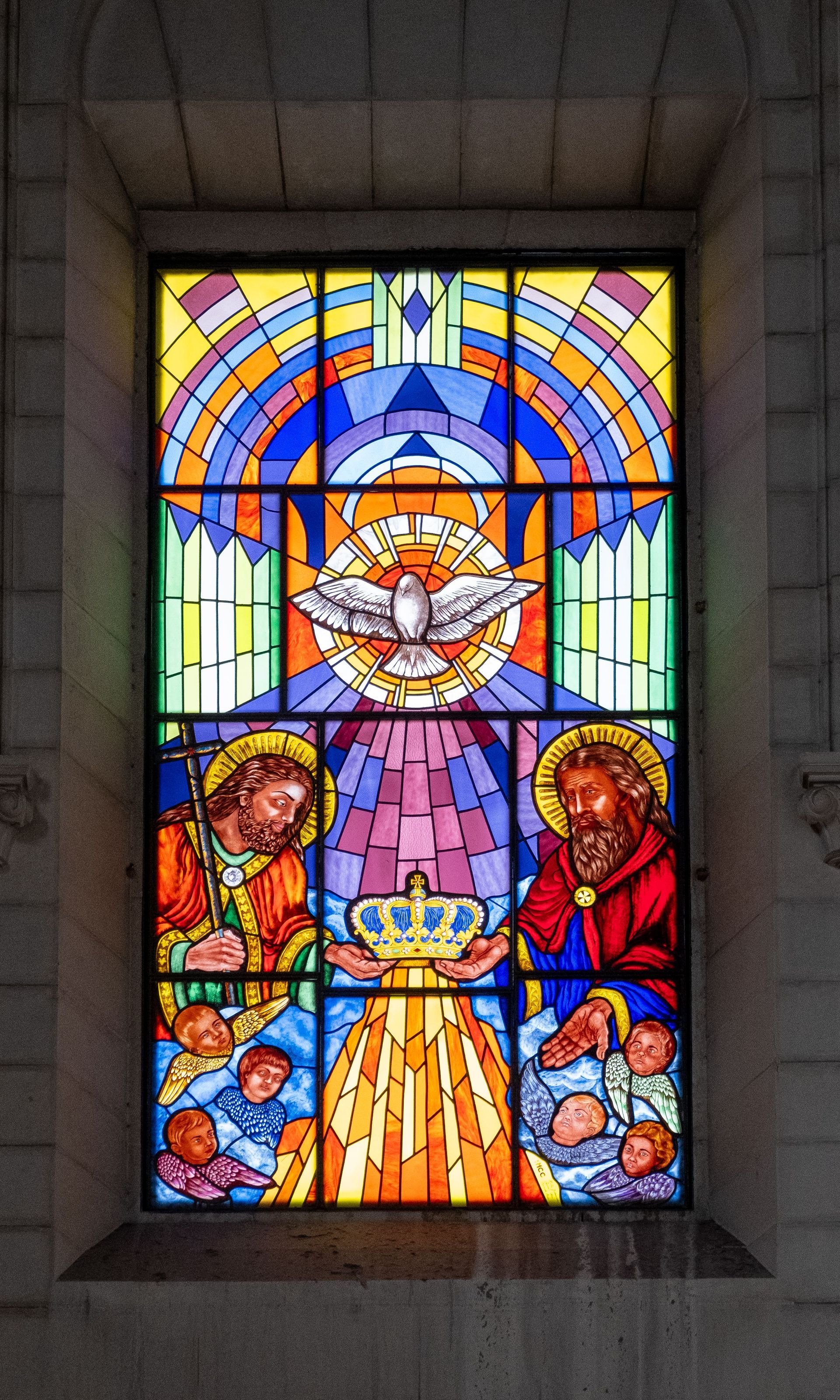
The feast we celebrate today is a feast of love. The love of the Father, Son, and Holy Spirit.


An ancient image given to us by the Eastern fathers speaks of the Trinity as a dance among the three persons.  The dance is a circular dance with each one of us invited to join in the dance.  This is a dance of love that includes each one of us.  The hand of the Father, the Son, and the Spirit reaches out to us in love, inviting us to join in the dance.  This is how Barbara Reid describes the dance:


The dance is an open circle that invites all onto the dance floor, drawing them right into the midst of the energetic flow of divine delight.  If some hesitate, preferring to sit on the sidelines, the Three-in-One circle back again, extending the invitation over and over to each and to all, changing the pace and the rhythm, so that even the most clumsy of us can learn the steps in the dance of divine love.


Paul suggests some practice steps for the dance: rejoice, mend your ways, encourage one another, seek agreement, live in peace, greet one another with a holy kiss.  In these ways, we help one another onto the dance floor, where we become one with the very source of grace, love, and communion. (1)


The divine dance reminds me of the song of the Mock Turtle in Alice in Wonderland:


Will you, won’t you, will you, won’t you, will you join the dance?

Will you, won’t you, will you, won’t you, won’t you join the dance?


(1) Barbara E. Reid, O.P., "A Dance of Love".  America Magazine, June 6, 2011.

By Rev. Christopher Welch April 26, 2026
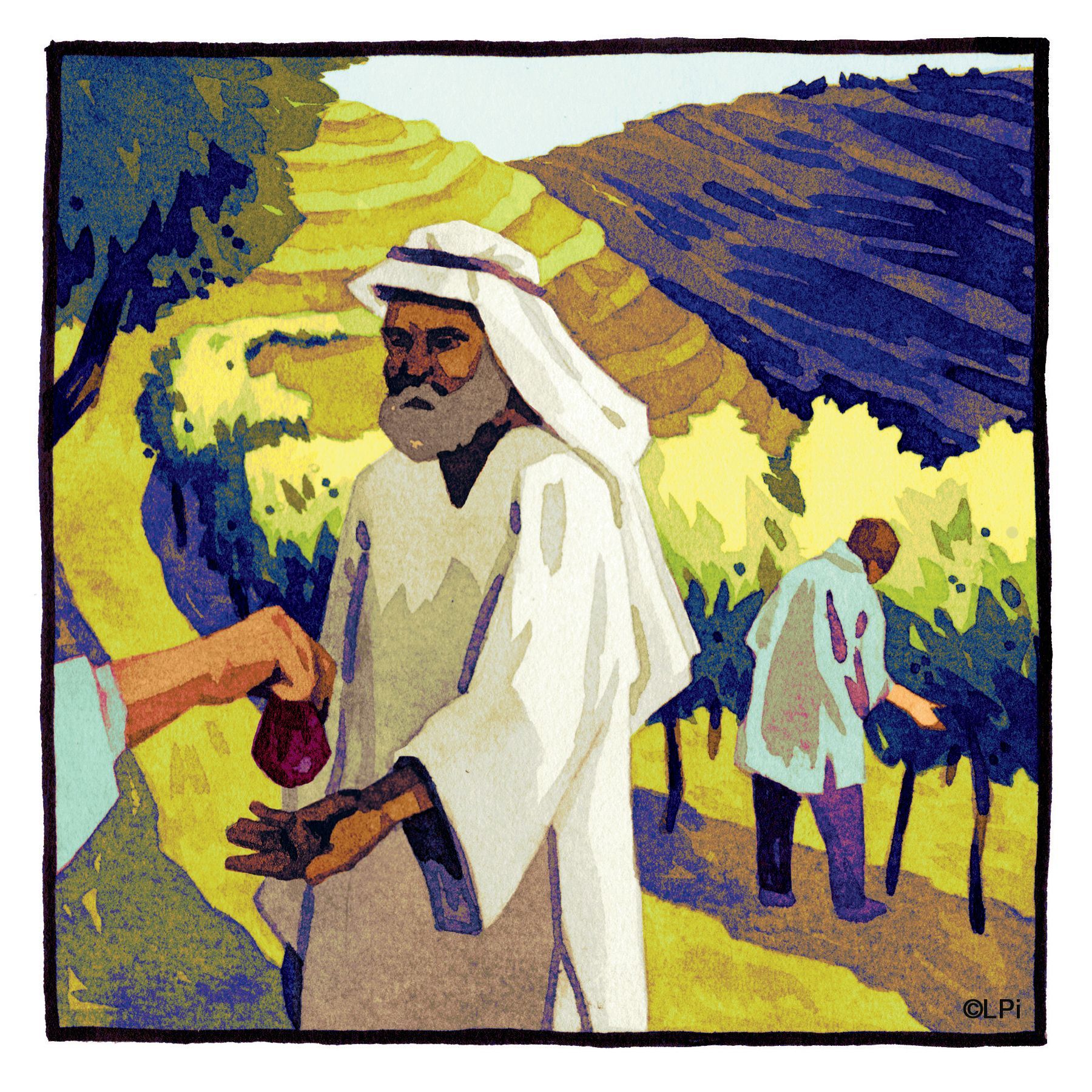
When C.S. Lewis wrote The Chronicles of Narnia , he wrote The Lion, The Witch and the Wardrobe first. In the old order this was the first book in the series. Today The Magician's Nephew is placed first, since it tells of the creation of Narnia by Aslan. In The Magician's Nephew we met Digory, who meets Aslan for the first time. Digory’s mom is ill and Aslan tells him about a fruit that may heal her. It is found in a walled garden. Jadis the White Witch also wants the fruit. She climbs over the wall to get it. The fruit gives her eternal life, but hers is a life of despair and hurt. She acquired the fruit by climbing over the wall; as in today’s Gospel, she is a thief. She did not enter through the sheep gate. The Tree of Youth (also, the Tree of Life) was the first, largest, and most spectacular Silver Apple Tree in existence. It grew at the very centre of the Garden of Youth, and bore shining, silver apples that had wonderful, powerful magical properties, and gave off an ethereal, breathtaking, almost irresistible smell. The tree was enclosed within the Garden, and roosting in its branches was a single Phoenix (and the only one ever seen in Narnia). Though the apples were silvery and incredibly beautiful, their juice was darker than one would expect. The first person to eat the Apples of Youth was Jadis who, dismissing the written warning that the fruits should only be plucked to help others, and not to be eaten for oneself, climbed into the Garden over the wall, and plucked a fruit for herself. After she had greedily eaten the fruit, Jadis claimed that she felt such changes within her that she knew that she would never grow old or die. When Digory spotted her throwing away the core of the apple she had eaten, and saw how the dark juice stained her mouth horribly, he guessed - rightly - how she had entered the Garden, and thought he understood what the last line: For those who steal or those who climb my wall, shall find their heart's desire and find despair meant, for, despite the fact that Jadis looked "stronger and prouder than ever, and even, in a way, triumphant", her face was "deadly white, as white as salt". Presumably ignorant of what she had doomed herself to, Jadis tried twice to tempt Digory into disobeying Aslan: first, by encouraging him to eat the fruit himself, telling him that it would make him alive and young forever. Second, telling him to give the fruit to his ill, dying mother instead, assuring him that it would cure her of her illness. Digory, very fortunately for him and his mother, was able to resist both temptations, and even angrily rebuffed Jadis, who retorted by calling him a fool to throw away his one and only chance of endless youth. When Jadis began to feel the dark and cold inside her, she fled from the Western Wild, to the far north, to presumably begin creating her army. However, as Aslan said, it was actually Jadis, not Digory, who was a fool, given that the fruit would never work happily for any who pluck it at their own will, and that "length of days with an evil heart is only length of misery, and already she begins to know it" - Jadis' immortality meant that the misery that constantly plagued her because of her dark, evil heart would never end. Digory, by resisting the two devastating temptations, actually saved himself and his mother from terrible fates that would have definitely befell them if he had succumbed to either one of the temptations. When Digory returned to Aslan with the Apple of Youth, Aslan told him to throw it on the bank of the Great River of Narnia, where it grew into the Tree of Protection that protected the Kingdom of Narnia from all enemies for 898 years. In just a matter of days the tree along with the rest of the garden presumably disappeared into Aslan's Country. (1) There is a warning posted on the wall of the garden: Come in by the gold gates or not at all, Take of my fruit for others or forbear, For those who steal or those who climb my wall Shall find their heart’s desire and find despair. (2) The witch did not enter by the gates. She used the fruit for herself and will spend her days in despair. Those of us who enter through the sheep gate via the waters of baptism use the fruits of the Holy Spirit to help others. They are not for our use. Many will testify that what we do for others comes back to us in abundance. On this “Good Shepherd Sunday", we enter through the sheep gate and we share what we have found with others. Each time a person is baptized in this space, we gather as a community to help that person in his/her journey as a member of the body of Christ. We come not as thieves; we enter through the sheepgate and, in doing so, we find immortal life and joy and not immortal life and despair as did Jadis the witch. (1) https://narnia.fandom.com/wiki/Tree_of_Youth (2) The Magician's Nephew (1955), page 185
By Deacon Paul Cerosaletti April 19, 2026
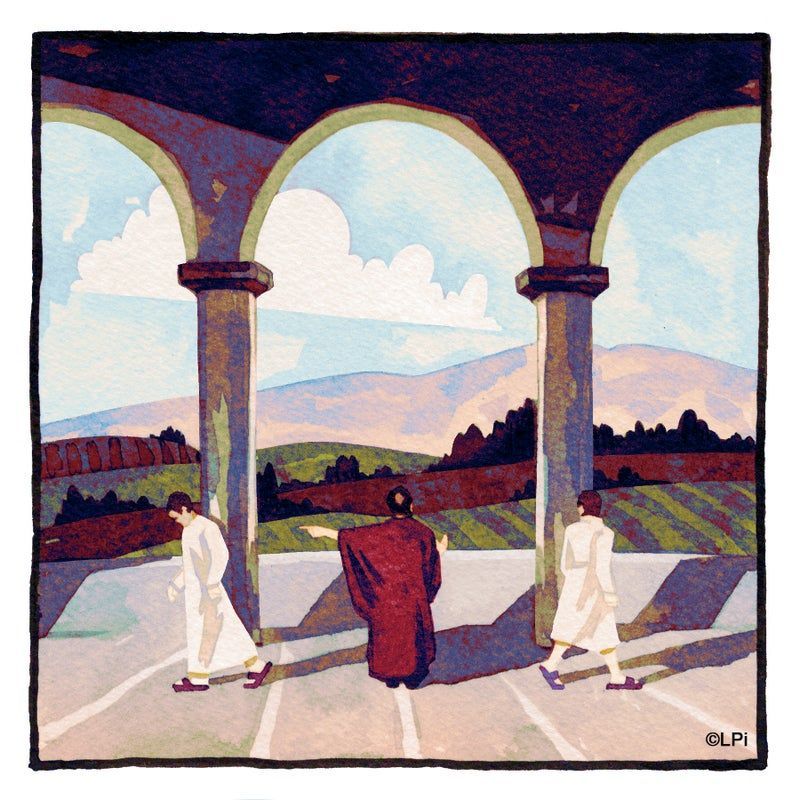
The Road to Emmaus is a metaphor and model for the Christian life. The two disciples gather. They come together. They gather in spite of the fact that they are struggling with their faith in Jesus. They look downcast when they encounter Jesus (whom they do not recognize.) Their words betray their struggling faith and lost hope: “we were hoping that he would be the one to redeem Israel”. As Christians we too gather today. We gather out of faith and in hope. And, if we are honest with ourselves, we gather because of our struggles with our faith and hope. Like the disciples on the road to Emmaus, it is important that we come together, we come into communion with each other, because it’s in the midst of that gathering, that communion, that God becomes present in our midst to strengthen our faith and give us hope, in Him and through one another. There is another very practical and important reason for us to gather as disciples of Christ. You see, the one thing about the road to Emmaus, the road of our faith journey, is that there are potholes! We walk together in this journey of faith just as Jesus sent his disciples together to minister. We look out for each other, watching out for the potholes in the Road of Faith to Emmaus, to warn each other, to help each other around those potholes, and to help lift each other with God’s help out of those potholes. We walk the Road to Emmaus in response to God who calls us to follow this road, planting the seeds of desire in us to follow this road, walking with each other , that we might encourage each other — and ourselves — to stay on that road. This spiritual companionship is critical. Now, as the disciples travel the road to Emmaus, they encounter the Risen Christ. Though they don’t recognize Jesus yet, Christ — God the Word — makes scripture present to them, and breaks it open for them, interpreting all that the prophets had written about him. We too, as gathered disciples today, have the Word of God made present to us through the readers who, with the inspiration of the Holy Spirit, give their voice to the breath of the Spirit in proclaiming that Word in our midst. Just as with the disciples on the road to Emmaus, Jesus makes himself present here in our midst through the proclaimed Word! Do we experience the scripture proclaimed to us in each Mass, each Children’s Liturgy of the Word, each time we pray the Liturgy of the Hours, each scripture study, each What About Monday , Cursillo, and Men’s faith sharing group, recognizing Jesus present in our midst, our God who is walking with us on our Road to Emmaus faith journey? Are our hearts burning within us when we hear the Word proclaimed? Though fed by Jesus the Word on the road to Emmaus, it is only in the breaking of the bread that the disciples finally come to recognize Christ in their midst. And how powerful and how much is in that action of breaking bread. Just as when Jesus feeds the 5,000, just as when he gathers with the disciples in the upper room at the Last Supper, just as when he gathers at table with the disciples in Emmaus, he takes the bread , says the blessing , breaks the bread , and gives it to them. The fact that Jesus chooses to reveal himself to the disciples in Emmaus in the breaking of the bread tells us that he wants us too to recognize Him today in the breaking of the bread. In a few moments, those same four actions of Christ will again be made present to us today in the priest, Fr. Chris, who will take the bread from the gift bearers, bless the bread in the Eucharistic prayer, break the bread in the fractionation rite, and give it to us as Eucharist in Communion. Ah, that we would have our eyes opened to recognize Christ, the extraordinary in the midst of the ordinary! To see Christ present, not only in the broken bread, the Eucharist, but equally important and perhaps more challenging, in one another! What happened next to the disciples at Emmaus confounds us a bit, for the Lord, who wishes that he be made known in the breaking of the bread, disappears from their sight. What are we to make of this? St. Augustine gives us insight when he wrote: He withdrew from them in the body, since he was held by them [now] in faith. That indeed is why the Lord absented himself in the body from the whole Church, and ascended into heaven, for the building up of faith. After all, if you only know what you can see, where does faith come in? But if you also believe what you cannot see, when you do see it you will rejoice. Let faith be built up, because it will be paid back with sight. (1) Sisters and brothers, we walk this road of the journey of faith, our Road to Emmaus, together. Like the disciples on the road to Emmaus, we walk it together with the Lord, whether we recognize Him in our midst or not. It is a journey of a lifetime, lived day-to-day and experienced often daily, as a journey from dark to light, from despair to hope, from unbelief to belief. It is a journey we walk by faith, and not by sight, no gracious words we hear, as Him who spoke as none e'er spoke, and we believe him near. (2) (1) St. Augustine, sermon 235 in Sermons , trans. Edmund Hill, O.P., The Works of St. Augustine III/7 (New Rochelle NY: New City Press, 1993) (2) We Walk by Faith : text by Henry Alford (alt.), tune by Marty Haugen. ©1984, 2006, GIA Publications, Inc. 
By Fr. Christopher Welch April 12, 2026
It is said that when Oliver Cromwell had his official portrait painted, he asked that it be a true portrait with “warts and all”. You may say that the resurrected Christ appeared with “wounds and all”. Here is the resurrected Christ in his glorified body, who could pass through locked doors, appearing with the wounds of his crucifixion. He is resurrected, not simply resuscitated, in his glorified body still bearing the marks of his passion and death. Why, if he is in his perfect resurrected body, does Jesus still bear the marks of his passion and death? It is an interesting paradox that the woundedness of our lives can be what makes us who we are. There is a story told about a man in therapy: When he first met the counselor, he was asked to draw a picture of himself; he drew a picture of a vase with a crack in its side. After many years of therapy, the counselor showed the man the picture he had drawn. The man asked for use of the crayons. He took a yellow crayon and drew yellow strips just above the crack in the vase. When asked why he did that he told the counselor, “The crack is where the light can get in.” Leonard Cohen summed it up well in his song “Anthem”: There is a crack, a crack in everything. That’s how the light gets in. By showing the apostles his wounds, Jesus is reminding them that the wounds, the pain is not the end of the story. Many of us bear wounds from our past; they are what make us who we are. Part of the journey is the struggle. When we reach our destination, we can look back and see how the struggles made us who we are. Elbert Hubbard, the founder of the Roycrofters, once said, “God will not look you over for medals but for scars.” I am sure the disciples looked over the past three years and saw how the struggles made a difference; their time with Jesus made them new people.