Thirteenth Sunday in Ordinary Time, Year A
Our readings today speak of hospitality:


  • In the first reading from 2 Kings, we hear how the woman made a room for the prophet Elisha.
  • In the letter to the Hebrews, we read, “Be not forgetful to entertain strangers, for thereby some have entertained angels unawares.”
  • In the Gospel, Jesus speaks, “and whoever receives me receives the one who sent me.”


Hospitality is the essence of the life as a Christian.  Many religious communities include this action as part of their rule.  Hospitality is not easy.  It seems that people are not in need on my schedule.  Hospitality means stopping my actions and attending to others for a time.  People are not in need on my schedule.  Yet if I neglect them, I may miss out on entertaining angels.


This summer there will be many who are in need.  To them we offer our time and our hospitality. 


We are fortunate in our community that a hot meal is available seven days a week.  I meet many in need when I stop to help out at Saturday’s Bread.  Catholic Charities provides lunches to our students in July and August.  You may want to consider helping to provide meals to our homeless and our students in the summer.  It is so easy to get caught up in my schedule and I miss the chance to meet Christ in my neighbors and to miss out on entertaining angels.


One thing I admired about Bishop Hubbard is that when he spoke to you, you were made to feel you were the most important person.  As he spoke to you, he was moving on down the line, but for that moment you felt important, you were the most important person at that moment.  How often do we make others feel that they are taking up our time or are a burden?


On Thursday we celebrated LEON Day (Noel spelled backwards), which reminds us that we are six months away from Christmas. Maybe this is a good time to revisit a Christmas story.     


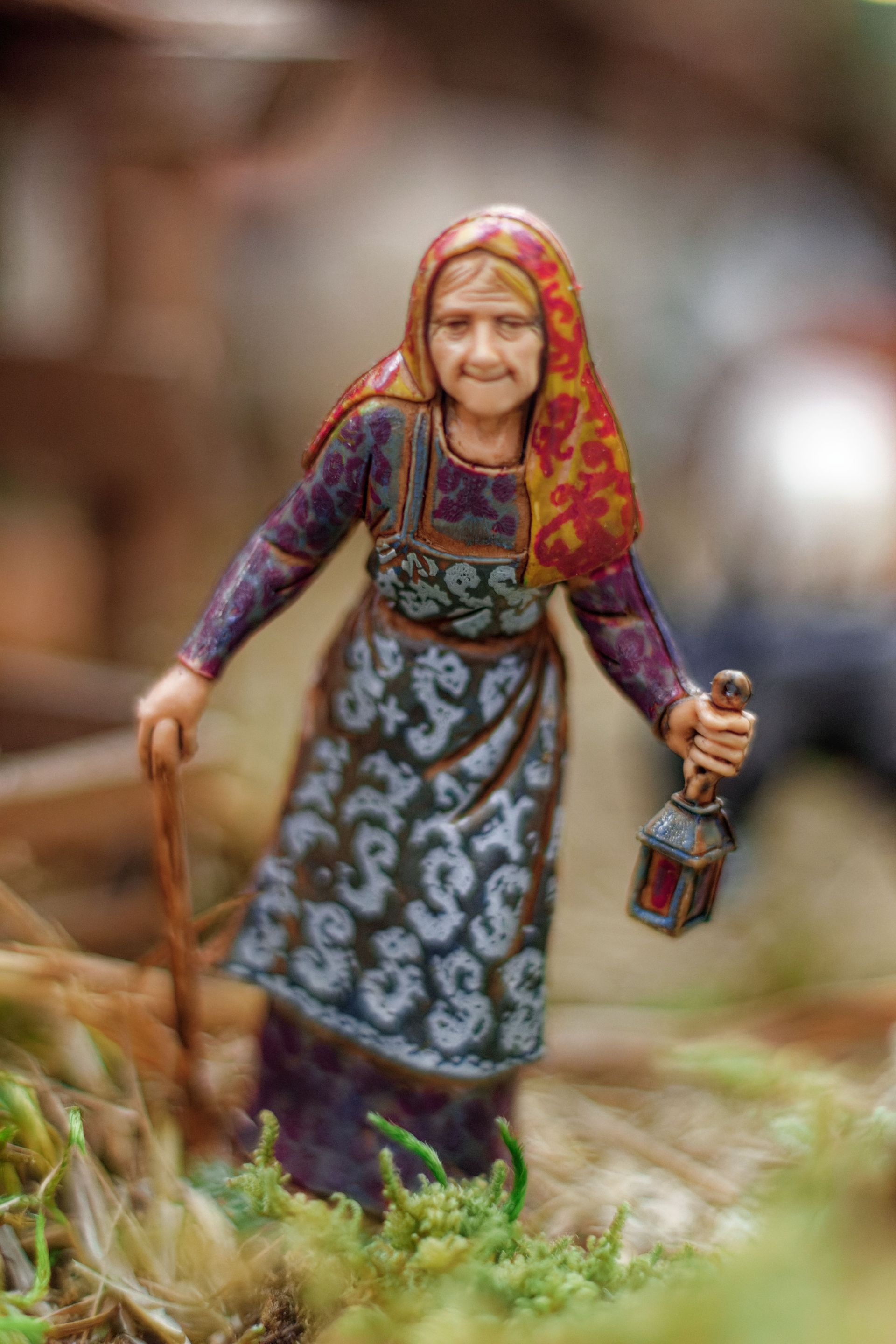
La Befana: The Witch of Christmas

By Il Postino Staff and Tessa Derksen


The legend of Befana began thousands of years ago and remains to this day a tradition practiced by Italian children and their families.  As the story goes, one day, the three Magi left their country bearing special gifts of gold, incense and myrrh for the new-born Jesus Christ.  They were guided by a star across many countries.  At every village that they passed, people ran to meet them and accompany them in their journey.


But there was one old woman who did not join the Magi.  She claimed to be too busy with her housework and promised to join them later when she had time.  The next day, she realized her mistake and frantically ran after the Magi with gifts for the child, still clutching her broom.  But it was too late – the Magi were long gone.


Let us not be too busy to meet Christ in our neighbors. Let us not be a Befana.

By Rev. Christopher Welch August 9, 2026
We all have storms in our lives. The issue for Peter seemed to have been, when he took his eyes off of Jesus, he began to drown. We need to keep our eyes on Jesus and when we experience storms in our lives that is how we get through, we keep our eyes on Jesus and we get through. The second thing Peter did when he began to drown is he called out to Jesus, “Save me, Jesus.” Jesus reached out and took Peter’s hand. Peter experienced being saved by the hand of Jesus. Today’s Gospel reminds me of the song “Hold On” from the musical The Secret Garden , based upon the book by Frances Hodgson Burnett. In the play, Mary Lennox is orphaned and moves in with her uncle. Her uncle is a hunchback and his wife died in childbirth; their child (Mary's cousin) is kept in isolation for fear he will be a hunchback like his father. Mary discovers her cousin’s mom’s garden and together they work to bring it back to life. The child begins to get well; when her uncle’s brother complains, Mary consults Martha the maid. Martha sings “Hold On”. Martha is singing about the situation with Mary’s cousin and uncle, but holding on to the face of Christ is how we weather our storms. Look up the song on YouTube. Here are some of the words from the song: When you see the storm is coming, See the lightning part the skies, It's too late to run- There's terror in your eyes! What you do then is remember This old thing you heard me say: "It's the storm, not you, That's bound to blow away." Hold on, Hold on to someone standing by. Hold on. Don't even ask how long or why! Child, hold on to what you know is true, Hold on 'til you get through. Child, oh child! Hold on! When you feel your heart is poundin', Fear a devil's at your door. There's no place to hide- You're frozen to the floor! What you do then is you force yourself To wake up, and you say: "It's this dream, not me, that's bound to go away." Hold on, Hold on, the night will soon be by. Hold on, Until there's nothing left to try. Child, hold on, There's angels on their way! Hold on and hear them say, "Child, oh child!" And it doesn't even matter If the danger and the doom Come from up above or down below, Or just come flying At you from across the room!  When you see a man who's raging, And he's jealous and he fears That you've walked through walls He's hid behind for years. What you do then is you tell yourself to wait it out And say it's this day, not me, That's bound to go away.
By Rev. Christopher Welch July 31, 2026
The gospel begins with the words: When Jesus heard of the death of John the Baptist.... John is Jesus’ cousin; John is the one who leaped in his mother's womb when he met Jesus in his mother’s womb. John is the one who baptized Jesus and now Jesus hears that John is dead by being beheaded. Jesus is in grief and wants to be alone. We are told that in his grief, Jesus went off to be alone. Word gets out where Jesus is and all the people show up looking for him to heal and feed them. We are told that Jesus’ heart is full of compassion for the people. Rather than telling them to go away, to let him be, he heals them. This is the life of a disciple – people are not in need on my schedule. When people show up, I need to attend to them. We can never do ministry with our eye on the clock. Although he was tired and in grief, Jesus cared for the people. He knew he could not be there always and his disciples would need to help out. When the disciples tell Jesus the people are hungry, the disciples were the hungry ones. Jesus tells them to give them something yourselves. This is Jesus’ way of calling them to act as disciples. I have fed them with my words; if they need food for their bodies, give it to them yourselves. The disciples find five loaves and two fish. Jesus offers a prayer. Jesus gives thanks for what has been provided, an action of gratitude. He then gives them to the disciples to distribute. Jesus is asking them to continue his ministry by feeding the people. What is left over fills 12 baskets; the number 12 reminds us of the 12 tribes. Jesus has come to feed the whole world. Jesus provides the feast and we as disciples share what we have been given with others. The five loaves and two fish are enough to feed the crowd and provide many leftovers. Our God is a God of abundance. What God has provided is not wasted and what God has provided is given to us by disciples who participate in God’s work. If we are to be disciples, we need to learn how to feed others. Like Jesus, we may find that being a disciple interrupts our life. When someone is in need we attend, we put aside our own agenda for a time and attend to the person in need. Our grief may come later after we care for the person in need. Those who were fed echo the words of Isaiah in the first reading. They come and are fed body and soul. The feeding of the soul are the words of Jesus and the feeding of the body comes from the hands of the disciples.
By Rev. Christopher Welch July 26, 2026
For many old movie buffs, the movie King Solomon's Mines is a classic. Our first reading tells the story of King Solomon and his prayer for wisdom. “For the treasures of his heart, not his mines, Solomon is rightly remembered.” The parables speak of searching for treasure; for us the treasure is our relationship with God. The one who found the treasure in the field sells all he has to buy the field. The merchant searching for pearls sells all when he finds one that is perfect. Today we are asked to consider: What is my treasure? What is my pearl of great price? What is so important I would sell all I have to possess it? In the parables Jesus is speaking about the kingdom of God. What is more important to us than the kingdom of God? What would I sell to possess the kingdom of God? I am reminded of a story by Fr. Anthony DeMello, a priest from India: When a holy man reached the outskirts of the village and settled under a tree for the night, a villager came running up to him and said, “The stone! The stone! Give me the precious stone!” “What stone?” asked the holy man. “Last night Lord Shiva told me in a dream that if I went to the outskirts of the village at dusk, a holy man would give me a stone that would make me rich forever.” The holy man rummaged in his sack and, pulling out a stone, he said, “He probably meant this one. I found it in the forest yesterday. Here, it’s yours if you want it.” The man gazed at the stone in wonder. It was the largest diamond in the world – the size of a man’s head. All night he tossed about in bed. At break of day he woke the holy man and said, “Give me the wealth that makes it possible for you to give this stone away.” The kingdom of God is not something we possess, but something we seek for and when we find it, we share it with others.