


Homilías del Padre Chris
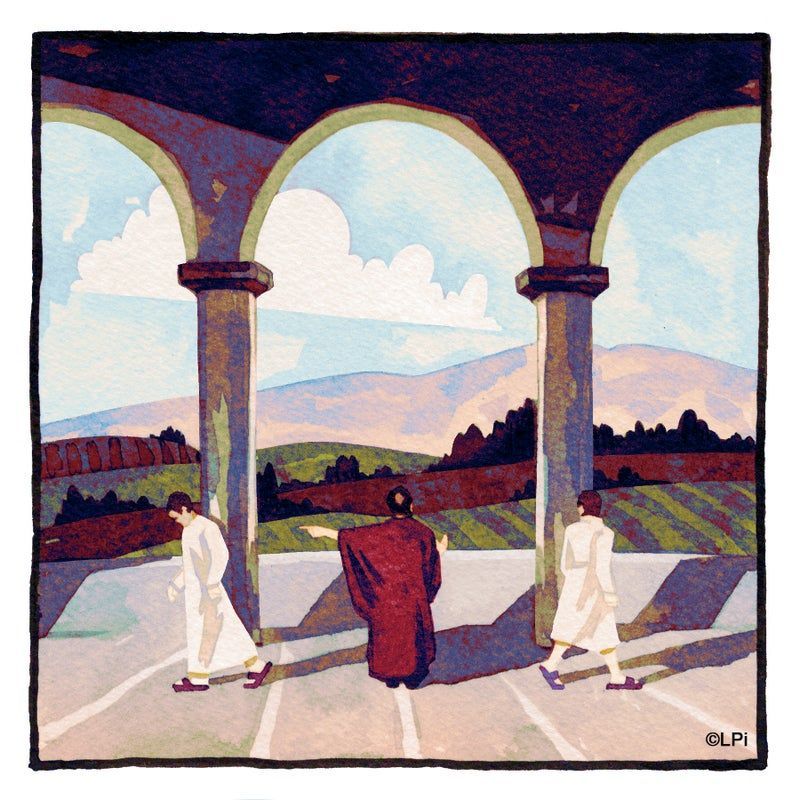
In today's parable we meet two brothers; one says he will go and doesn’t, the other says he will not go and does. The listeners decide the second did his father’s will. In life we judge people not by their words but by their actions. Those who act upon their words we honor. We are given second chances to reconsider our words and decide to do what we are asked to do. Too often it is hard to say 'yes' and act upon our 'yes'. This may have been the case with the second brother, but in time he said 'yes' by his actions. I am reminded of a meditation by Michael Quoist: I am afraid of saying "Yes," Lord. Where will you take me? I am afraid of drawing the longer straw, I am afraid of signing my name to an unread agreement, I am afraid of the "yes" that entails other "yeses." And yet I am not at peace. You pursue me, Lord, you besiege me. I seek out the din for fear of hearing you, but in a moment of silence you slip through. I turn from the road, for I have caught sight of you, but at the end of the path you are there awaiting me. Where shall I hide? I meet you everywhere. Is it then impossible to escape you? But I am afraid to say "Yes," Lord. I am afraid of putting my hand in yours, for you hold on to it. I am afraid of meeting your eyes, for you can win me. I am afraid of your demands, for you are a jealous God. I am hemmed in, yet I hide. I am captured, yet I struggle, and I fight knowing that I am defeated. For you are the stronger, Lord, you own the world and you take it from me. When I stretch out my hand to catch hold of people and things, they vanish before my eyes. It's no fun, Lord, I can't keep anything for myself. The flower I pick fades in my hands. My laugh freezes on my lips. The waltz I dance leaves me restless and uneasy. Everything seems empty, Everything seems hollow, You have made a desert around me. I am hungry and thirsty, And the whole world cannot satisfy me. And yet I loved you, Lord; what have I done to you? I worked for you; I gave myself for you. O great and terrible God, What more do you want? * * * Son, I want more for you and for the world. Until now you have planned your actions, but I have no need of them. You have asked for my approval, you have asked for my support, You have wanted to interest me in your work. But don't you see, son, that you were reversing the roles? I have watched you, I have seen your good will, And I want more than you, now. You will no longer do your own works, but the will of your Father in heaven. Say "Yes," son. I need your "yes" as I needed Mary's "yes" to come to earth, For it is I who must do your work, It is I who must live in your family, It is I who must be in your neighborhood, and not you. For it is my look that penetrates, and not yours, My words that carry weight, and not yours, My life that transforms, and not yours. Give all to me, abandon all to me. I need your "yes" to be united with you and to come down to earth, I need your "yes" to continue saving the world! * * * O Lord, I am afraid of your demands, but who can resist you? That your Kingdom may come and not mine, That your will may be done and not mine, Help me to say "Yes." — Michael Quoist in Prayers
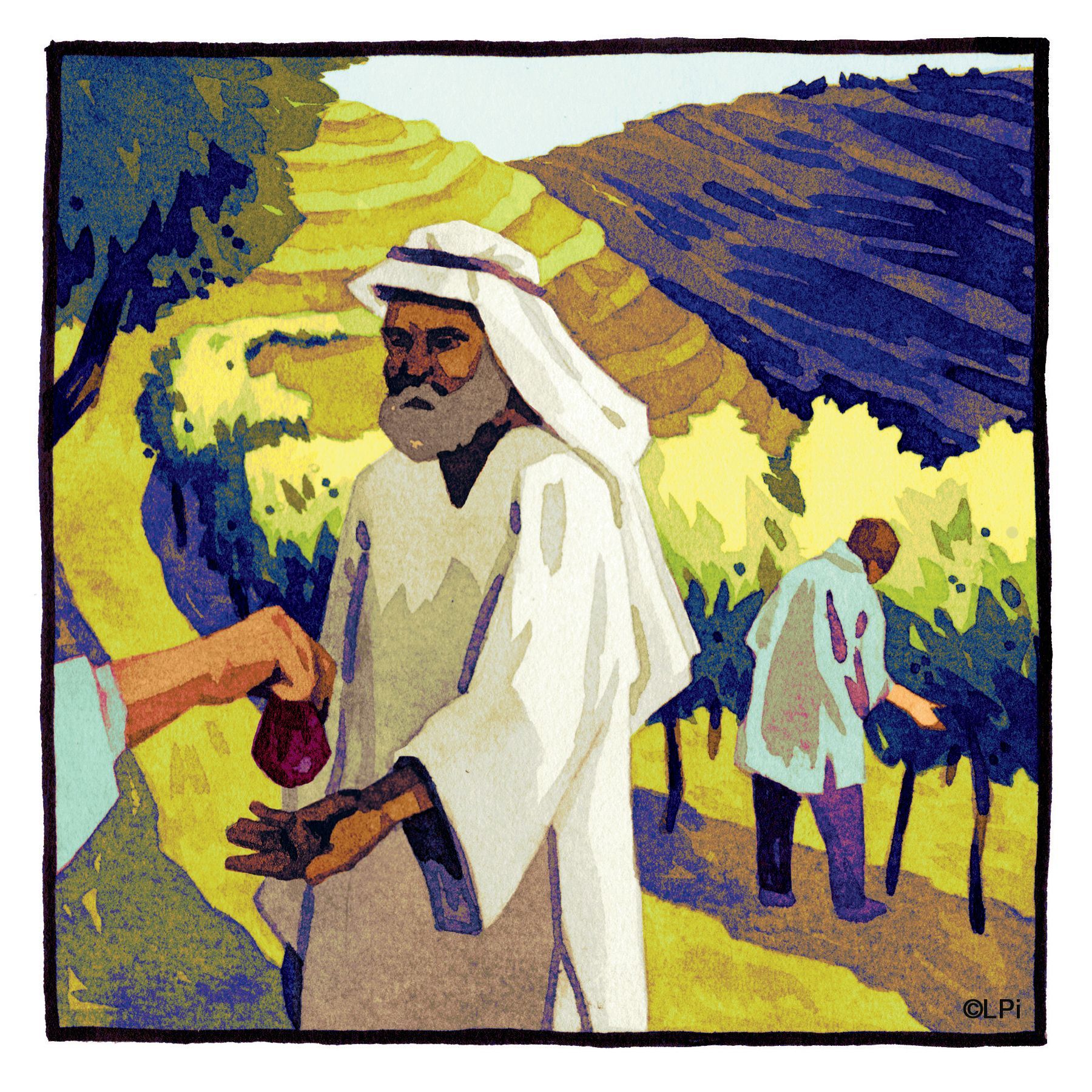
One of my most favorite responses I get from people when I greet them and ask “Hey, how are you?” is the response, “Better than I deserve.” There is something in that response that not only strikes a chord of humility but also of God’s generosity and mercy. Most of us have a strong sense of fairness. The response “better than I deserve” is rooted in our sense of fairness and justice, a sense that might lead us to understand, and perhaps even sympathize, with the reaction of the vineyard workers who labored all day, in the heat of the day, and yet are paid the same amount as those that worked only one hour. How is that right? But the parable we hear in the Gospel is not about what is ‘right and just’. The themes of this parable are about the lavish generosity and mercy of God and , as the Gospel always is, a challenge to examine what is going on in our own hearts — what is happening with our own conversion of heart . These two themes might come alive more for us, as God speaking directly to us, if we change one word in one verse in the parable to express what God intends for us. What if the verse, “Am I not free to do as I wish with my own money?” was instead read, “Am I not free to do as I wish with my own mercy ?” See how that changes things? We are often, so often, fixated on fairness, equity, and justice. There is nothing wrong with those concepts and virtues, except when we fail to live beyond them to generosity and mercy . We have a God who lives beyond justice, in generosity and mercy, and who calls us to do the same. You see, if we stop at fairness and justice, we find ourselves in the same place with the early laborers in the vineyard, exercising judgment on what is equitable, and in so doing end up metering generosity and mercy — not even our own generosity and mercy, but God’s! Now our response becomes, “Better than they deserve…” Our true motivations get called out by the owner of the vineyard when he says, “Are you envious because I am generous?” We end up subject to the same temptation the vineyard laborers experience, the capital sin of envy , the resentment at another’s good fortune. What instead should be the disposition of our hearts? Jesus himself tells us in a related parable about conversion of heart when he says, “There will be more joy in heaven over one sinner who repents than over ninety-nine righteous people who have no need of repentance” (Lk 15:7). Joy! We are called to fill our hearts with Joy at God’s generosity and mercy lavished upon our sisters and brothers who hear and heed a call to conversion of heart in Christ, no matter the stage in their lives; joy over one lost sheep who is found and brought home at the end of the day. Joy is the antidote of envy. Joy is our participation in the generosity and mercy of God, the fitting response to God’s generosity and mercy. And it is nothing short of an exercise of Love, which is to will the good of the other. None of us is deserving of God's generous grace and mercy. We do not merit it, nor should we meter it with our judgement, for we are all in need of it. How are we? I hope and pray, by the grace of God, with Joy in our hearts, “Better than we deserve.”
In the Masterpiece production of The Count of Monte Cristo , the main character is sent to prison; there he meets another prisoner who advises him, “If you seek for revenge, you should first dig two graves.” After the count achieves revenge he tells his friend, “The prisoner was right.” She responds, “Love can heal.” The readings today speak about forgiveness. Forgiveness is about choosing to love. When we forgive the other, we may not receive what we hoped for from the other. Forgiveness or love are not about the other person, but about me. There are many I will choose to love whom I do not like. Love is not simply about feelings, but love is a choice to forgive the other, means not hearing the words “I was wrong” or “I forgive you.” The choice to love may not change the other, but it will change me. One reason Jesus tells Peter to forgive 7 times 70 is that it may take time for the forgiveness to have an effect upon him. Jesus is familiar with the words of Sirach: hate not your neighbor; remember the Most High’s covenant, and overlook faults (Sir 28:7). Sometimes people will ask me why such and such is allowed to act as they do. I find myself reminding them that it is God who judges. King David knew he had done wrong, yet he was able to write the words of Psalm 103 — The Lord is kind and merciful, slow to anger, and rich in compassion — the psalm for today’s Mass. For the many things he did as pope, Pope Francis may be best remembered for a short phrase: "who am I to judge?" When asked who he was, Pope Francis responded, “I am a sinner.” We all have people in our lives who we would like to punish to seek revenge, but the better way is to forgive from our heart. When we forgive, we leave the judging to our God. Remember, it is “love that can heal.”

We are on the cusp of Delaware County Fair week, and if you've ever been to that fair, you may be well familiar with one of its fixtures: the pancake tent run by a Walton community church. This past week, I was on the fairgrounds in my secular job capacity as Cooperative Extension educator, helping get our displays ready in the Agricultural Awareness area of the fair, which happens to be right next to the pancake tent. The church was also busy getting their tent set up as well. At one point I glanced over and realized that their pastor was leading a small group in a Bible study, while others continued to set up their serving area and kitchen. How nice, I thought, that they made space for this in the busy-ness of their set up. We went about our tasks, while this small group immersed themselves in Scripture. At some point, I realized that I was hearing the pastor’s voice, floating in and out on the light breeze, but in a more sustained way, and I realized he was leading the group in an extemporaneous concluding prayer to their Scripture study. We continued to go about our setup, not really paying close attention to the group in prayer. A bit later, I realized the pastor is still offering this concluding prayer. I don't know how much time elapsed before he eventually stopped, but it seemed like 5-10 minutes! I thought to myself — “Wow” . If you have ever led prayer extemporaneously, it is not easy to do it for an extended time period and have it flow without breaks, in a coherent, non-repetitious manner. How nice, I thought, in the midst of a workday to hear prayer offered, and I admired the pastor’s freedom to offer it in a time, place, and manner I was not expecting. Although I was not directly a participant in this pastor’s Scripture study and prayer, his example within earshot and eyesight was an inspiration of faith to me, no matter how small it may seem. God often brings us to a greater faith through the words and actions of our brothers and sisters around us — Catholic and non-Catholic alike — through the witness of their lived faith. Faith is at the heart of all of the readings we hear today, from the prophet Isaiah, St. Paul’s letter to the Romans, and Matthew’s Gospel. They all speak of foreigners — Gentiles — coming to salvation through faith. In the Jewish world, salvation was through Judaism and Israel. And while Jesus is a Jew, his healing of the Canaanite woman and Paul’s ministry to the Gentiles show that salvation is no longer exclusive to the Jews; rather that they can come to salvation through faith in Christ. It is, in fact, faith that is central to the Gospel passages we have heard each of the last three weeks: the disciples doubting that there was enough food to feed 5000 people, then watching and helping Jesus do so; Peter doubting the presence of Christ and that Christ could sustain him walking across the water and then being rescued by him; and a Canaanite woman believing Jesus, as Lord and Master, could heal her daughter, persevering in her petition for his help…and being rewarded for her great faith. These stories of faith beg questions of faith for us today — which of the characters are we? Are we the disciples, doubting there is enough to feed 5,000 in the presence of God? Are we Peter, wanting to believe, then testing his belief, then sinking in a sea of doubt? And the Canaanite woman, an outsider; is our faith as great as hers? How does the witness of the Canaanite woman challenge us to look and see the witnesses around us today, even those we consider outsiders, who inspire us to a greater Christian way of life — a greater lived Christian faith? A life of greater generosity, deeper compassion, richer mercy, and more fervent faith. In short, a life of love.

We all have storms in our lives. The issue for Peter seemed to have been, when he took his eyes off of Jesus, he began to drown. We need to keep our eyes on Jesus and when we experience storms in our lives that is how we get through, we keep our eyes on Jesus and we get through. The second thing Peter did when he began to drown is he called out to Jesus, “Save me, Jesus.” Jesus reached out and took Peter’s hand. Peter experienced being saved by the hand of Jesus. Today’s Gospel reminds me of the song “Hold On” from the musical The Secret Garden , based upon the book by Frances Hodgson Burnett. In the play, Mary Lennox is orphaned and moves in with her uncle. Her uncle is a hunchback and his wife died in childbirth; their child (Mary's cousin) is kept in isolation for fear he will be a hunchback like his father. Mary discovers her cousin’s mom’s garden and together they work to bring it back to life. The child begins to get well; when her uncle’s brother complains, Mary consults Martha the maid. Martha sings “Hold On”. Martha is singing about the situation with Mary’s cousin and uncle, but holding on to the face of Christ is how we weather our storms. Look up the song on YouTube. Here are some of the words from the song: When you see the storm is coming, See the lightning part the skies, It's too late to run- There's terror in your eyes! What you do then is remember This old thing you heard me say: "It's the storm, not you, That's bound to blow away." Hold on, Hold on to someone standing by. Hold on. Don't even ask how long or why! Child, hold on to what you know is true, Hold on 'til you get through. Child, oh child! Hold on! When you feel your heart is poundin', Fear a devil's at your door. There's no place to hide- You're frozen to the floor! What you do then is you force yourself To wake up, and you say: "It's this dream, not me, that's bound to go away." Hold on, Hold on, the night will soon be by. Hold on, Until there's nothing left to try. Child, hold on, There's angels on their way! Hold on and hear them say, "Child, oh child!" And it doesn't even matter If the danger and the doom Come from up above or down below, Or just come flying At you from across the room! When you see a man who's raging, And he's jealous and he fears That you've walked through walls He's hid behind for years. What you do then is you tell yourself to wait it out And say it's this day, not me, That's bound to go away.
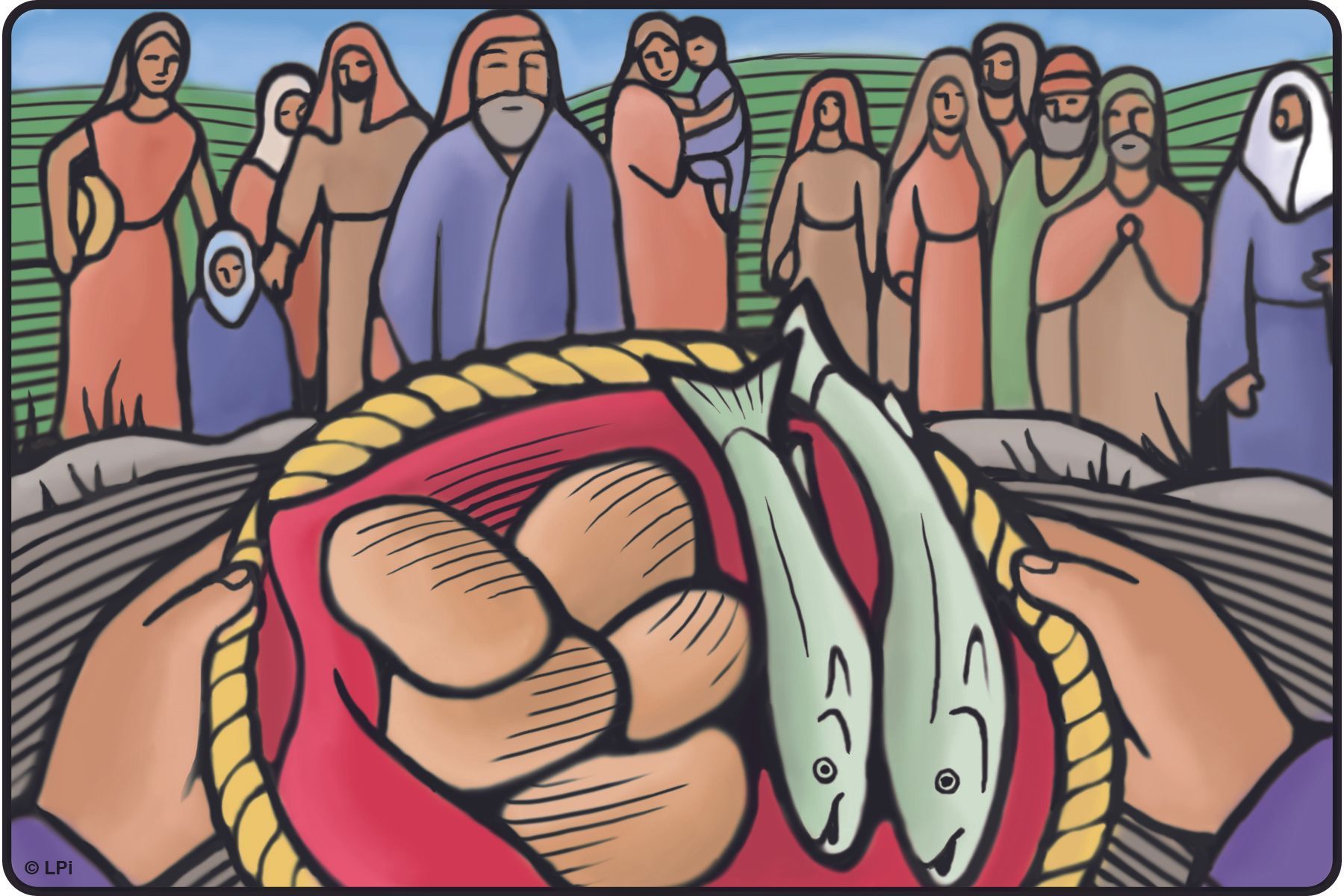
The gospel begins with the words: When Jesus heard of the death of John the Baptist.... John is Jesus’ cousin; John is the one who leaped in his mother's womb when he met Jesus in his mother’s womb. John is the one who baptized Jesus and now Jesus hears that John is dead by being beheaded. Jesus is in grief and wants to be alone. We are told that in his grief, Jesus went off to be alone. Word gets out where Jesus is and all the people show up looking for him to heal and feed them. We are told that Jesus’ heart is full of compassion for the people. Rather than telling them to go away, to let him be, he heals them. This is the life of a disciple – people are not in need on my schedule. When people show up, I need to attend to them. We can never do ministry with our eye on the clock. Although he was tired and in grief, Jesus cared for the people. He knew he could not be there always and his disciples would need to help out. When the disciples tell Jesus the people are hungry, the disciples were the hungry ones. Jesus tells them to give them something yourselves. This is Jesus’ way of calling them to act as disciples. I have fed them with my words; if they need food for their bodies, give it to them yourselves. The disciples find five loaves and two fish. Jesus offers a prayer. Jesus gives thanks for what has been provided, an action of gratitude. He then gives them to the disciples to distribute. Jesus is asking them to continue his ministry by feeding the people. What is left over fills 12 baskets; the number 12 reminds us of the 12 tribes. Jesus has come to feed the whole world. Jesus provides the feast and we as disciples share what we have been given with others. The five loaves and two fish are enough to feed the crowd and provide many leftovers. Our God is a God of abundance. What God has provided is not wasted and what God has provided is given to us by disciples who participate in God’s work. If we are to be disciples, we need to learn how to feed others. Like Jesus, we may find that being a disciple interrupts our life. When someone is in need we attend, we put aside our own agenda for a time and attend to the person in need. Our grief may come later after we care for the person in need. Those who were fed echo the words of Isaiah in the first reading. They come and are fed body and soul. The feeding of the soul are the words of Jesus and the feeding of the body comes from the hands of the disciples.

For many old movie buffs, the movie King Solomon's Mines is a classic. Our first reading tells the story of King Solomon and his prayer for wisdom. “For the treasures of his heart, not his mines, Solomon is rightly remembered.” The parables speak of searching for treasure; for us the treasure is our relationship with God. The one who found the treasure in the field sells all he has to buy the field. The merchant searching for pearls sells all when he finds one that is perfect. Today we are asked to consider: What is my treasure? What is my pearl of great price? What is so important I would sell all I have to possess it? In the parables Jesus is speaking about the kingdom of God. What is more important to us than the kingdom of God? What would I sell to possess the kingdom of God? I am reminded of a story by Fr. Anthony DeMello, a priest from India: When a holy man reached the outskirts of the village and settled under a tree for the night, a villager came running up to him and said, “The stone! The stone! Give me the precious stone!” “What stone?” asked the holy man. “Last night Lord Shiva told me in a dream that if I went to the outskirts of the village at dusk, a holy man would give me a stone that would make me rich forever.” The holy man rummaged in his sack and, pulling out a stone, he said, “He probably meant this one. I found it in the forest yesterday. Here, it’s yours if you want it.” The man gazed at the stone in wonder. It was the largest diamond in the world – the size of a man’s head. All night he tossed about in bed. At break of day he woke the holy man and said, “Give me the wealth that makes it possible for you to give this stone away.” The kingdom of God is not something we possess, but something we seek for and when we find it, we share it with others.
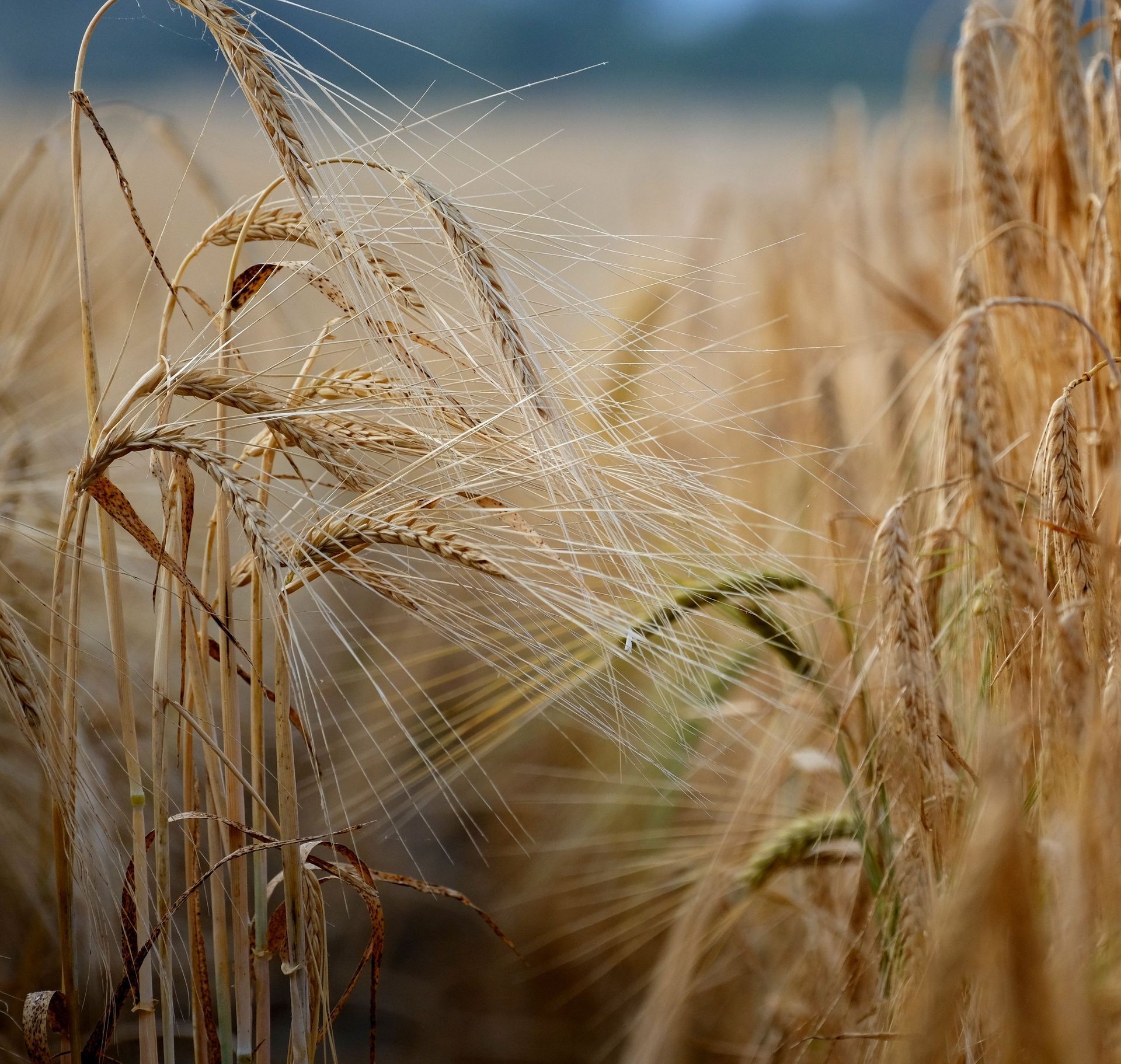
There is a 16-acre field that stretches up behind my house on what used to be my father’s farm. This spring, the farmer that rents that field planted a “new seeding” of alfalfa haycrop, rotating it out of corn production from the previous year. He tilled the soil, carefully incorporating the remains of the previous corn crop, making the ground level. He then rolled it with a large smooth roller to smooth the ground, push down the stones and make a firm seedbed. He seeded the alfalfa, and then rolled the ground again, making sure there was good seed-soil contact, to ensure the alfalfa, which too is the smallest of seeds, would germinate. Then he left the field. And waited. And hoped. And trusted. For the planting of seed is an act of faith. That field of newly seeded alfalfa behind my house sprang up with great vigor in May and early June. It looked wonderful — a solid stand. The rain in the third week of June benefited the crop as it was getting dry, but brought with it as well a flush of an unwanted crop — weeds! This farming reality mirrors Jesus’s reminder in the parable that with the good seed of God sown and growing, there will always be weeds of the world — be they people, places, or things — that will compete with the growth of God’s Kingdom. In perhaps a surprising twist in the parable, the farmer instructs the laborers not to pull the weeds, lest they uproot the good crop as well. This is an exhortation to trust and patience in the action of God. While weeds can be devastating to a crop, in the Kingdom of God, it's important to remember that these weeds were once sown as good seed. St. Isadore of Pelusium, a fifth-century Desert Father of the Church, taught that God, the Master of the Harvest, is patient , and the weeds are not to be immediately pulled and burned, in order to give time for us to repent and mend our ways, that we might become good grain again. What? Weeds turned into good grain? Impossible, we think? But St. Isadore reminds us, lest we forget, of the striking examples of St. Peter and St. Paul, who strayed in sin, and yet with God’s grace and repentance went on to yield good and abundant fruit. Indeed, this is the story of so many of the saints! Thanks be to God for a merciful Father who “[gives] his children good ground for hope that [he] would permit repentance for [our] sins” (Wis 12:19b) — giving us a chance to become good grain again! One more thing about that field of newly-seeded alfalfa that became full of weeds. It was what we would term a “clear seeding”, which is a seeding solely of the intended principal crop (alfalfa in this case). There is another strategy that farmers employ to manage weeds in a new seeding, which is to plant them with another intended crop, usually a small grain like oats or barley. We call this other crop a companion crop . The companion springs up early and outcompetes the weeds, holding them at bay. Yet, due to its narrow but tall stature, it allows light down into the canopy to nurture the alfalfa. The result is two intended crops that thrive, helping each other yield a valuable and bountiful harvest. This agricultural practice reminds us that we are never Christians in isolation, but are indeed Christians in communion — companions that help each other on the journey towards the eternal harvest. That journey is the journey of holiness. The Church teaches that we are all called to holiness. That is our ultimate state of being for which we each are created. God sows us as companion crops for each other that we might help each other to grow in holiness, helping each other along the way by example and by deeds of love, kindness, and mercy, which sometimes include fraternal correction. Deeds which sometimes are the smallest of seeds, but grow to have the greatest of effect on each other. When we help each other grow in holiness, we fill the world with companion crops, keeping the weeds of the world at bay.
We are well into summer. I keep getting shown photos of the gardens people are tending in their backyards. It takes work and patience for produce to grow. Come in a few weeks and we will have a bountiful harvest of all kinds of produce. Those who are farmers can readily understand the parable of the sower in today’s Gospel. God sends out God’s word, and we are to be good soil for the word to take root. The challenge is to become fertile soil for the word of God. How do we become fertile soil? To be fertile ground, we need to keep an open mind. Too often I find myself not listening to what the other is saying, as I compose in my mind a response to what I think I am hearing. To really listen means to keep my mind open to receive what the other is saying. To listen means putting aside my agenda for a time. Sometimes the word of God struggles to get through all the noise in my brain. This is why quiet time in my day is so important; those who wish to listen to the voice of God go to a quiet place to listen for God. In these summer months we will spend time in quiet places where the word of God may speak to us. God’s voice is found at the seaside, in the woods, and on mountain tops. We need to quiet ourselves and listen for God’s voice. Making ourselves fertile ground for God’s word is not easy. We need to each day work to calm ourselves to hear God’s word. St. Ignatius of Loyola suggests a daily examen. Each day as we pray the Examen we become fertile ground. Here is how it is done: How to Pray the Examen Place yourself in God’s presence. Give thanks for God’s great love for you. Pray for the grace to understand how God is acting in your life. Review your day — recall specific moments and your feelings at the time. Reflect on what you did, said, or thought in those instances. Were you drawing closer to God, or further away? Look toward tomorrow — think of how you might collaborate more effectively with God’s plan. Be specific and conclude with the “Our Father.” Each day we work to make ourselves fertile ground.

On this July 4th weekend, we recall our land’s independence from a foreign king and a foreign government. We have thrown off the yoke of King George III; we are a free and independent nation. For 250 years we have been learning what it means to live as an independent and free society. Today Jesus invites us to consider taking upon a yoke as we go forward as disciples of him. The yoke of King George was too heavy for this nation, but the yoke of our God, we are told by Jesus, “is easy and light.” What is the yoke of Jesus? The yoke of Jesus is about the kingdom of God, learning to love others as we love ourselves. As disciples of Jesus we take on the yoke of the Gospel. When life feels heavy, we turn to our God, and our God helps to make our burdens light. There are many things in life that may seem like a yoke, a burden, but if we look at them in a new way, we see our God helping us to carry our burden. As Jesus invites us to consider the childlike, let me share with you a story: The Fable of The Birds At the beginning of time, all the animals were walking around discovering what it was like to be alive. All except the birds! They were doing nothing but complaining because God had given them a heavy burden that he’d given to no other animals: those awkward appendages on their shoulders. God must be punishing them somehow. Why did they have to carry these things around, making it hard to walk? “Why?" they asked. “Why us?” Finally, two or three of the more adventurous birds began to move their appendages. They began to flutter them, and soon they discovered that the very things they regarded as a burden actually made it possible for them to fly. And no other animals could fly. The “heavy burden” turned out to be a wonderful gift. Is there something in your life that at first glance seemed a burden, but later was seen as a gift? One reason why we value the innocent and simple among us is that they can help us to see life and who we are with new eyes. The simple or innocent can sometimes help us see what we thought was a burden as a gift. In the lives of the saints, we read about many who took what seemed to be a burden and made it an asset: The first disciples were simple fishermen. They were not scholarly, they couldn’t read, but they took their experience of Jesus and let it form them as disciples. What was a burden became an asset. Peter denied the Lord on the eve of his death. This made him more compassionate to sinners and those who struggled to have courage. Paul was blinded for 3 days; a former killer of Christians saw with new eyes and preached the good news to the Gentiles. Thomas doubted the Resurrection but came to faith in his doubt. Theresa the Little Flower loved Jesus and others with the simple love of a child of God. St. Kateri looked for and saw God present in the trees and the nature of the forests where she made her home. Mother Teresa of Calcutta saw our Lord present in the sick and dying in India. Blessed Stan Rother, a farmer’s son from Oklahoma who couldn’t read Latin, learned to speak in the native tongue of the men and women who he ministered with in Guatemala. With the eyes of a child, with childlike faith, we learn to see the burdens we carry as paths to faith in the help and care of our God. Let us give thanks today for the gift of freedom and let us give thanks for the gift of our God who makes our burdens light.
